
The U.S. Senate is scheduled to hold a key procedural vote on the CLARITY Act at 2:15 p.m. ET on September 15. The vote will test whether debate on the motion to proceed to H.R. 3633 can be limited so the bill can move toward Senate consideration. It is not a vote on final passage, and even a successful result would leave several legislative steps unresolved.
By Ulysses Cornelius. Educational market analysis, not financial advice. The Senate schedule, final draft summary, reporting, and official Kalshi market data were checked at 1:27 p.m. ET on September 15, 2026.
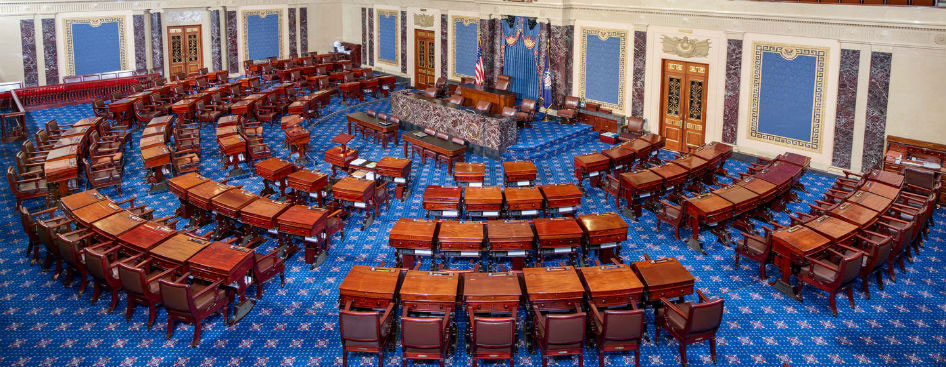
Feature image: the United States Senate chamber. Photograph by the United States Senate, public domain, via Wikimedia Commons.
TL;DR
- The Senate Daily Press lists a 2:15 p.m. ET cloture vote on the motion to proceed to H.R. 3633, the Digital Asset Market Clarity Act.
- Cloture needs 60 votes. Success would limit debate on the motion to proceed. The Senate would still have to adopt that motion before considering the bill.
- The final Republican draft adds revised ethics enforcement and a stablecoin deposit-flight mechanism, but Democrats and banking groups still say major concerns remain.
- Kalshi contracts for a broad crypto market-structure law fell sharply before the vote. The before-2027 market showed a 13 to 15 cent bid-ask range at 1:27 p.m. ET, down from a previous price of 29 cents.
What changed in the CLARITY Act vote
The U.S. Senate Daily Press says the Senate will vote at 2:15 p.m. ET on cloture on the motion to proceed to H.R. 3633. This is the bill's first major floor test after it cleared the Senate Banking Committee in May and was placed on the legislative calendar in June.
Cloture on the motion to proceed is a procedural gate. Reaching 60 votes would limit debate on that motion. The Senate would still have to adopt the motion to proceed before formally considering the measure. It would not constitute final Senate passage. If the Senate later passes a version that differs from the House bill, both chambers would still need to approve identical language before it could go to the president.
The distinction matters because several headlines have described September 15 as a decisive vote on the bill itself. Today's roll call answers a narrower question: whether enough senators support moving the process forward.
What is in the final Senate draft
Republican sponsors released a final draft before the vote. Their official summary says it incorporates 126 changes requested by Democrats. The draft would be offered as a substitute amendment if cloture is invoked.
The latest text adds a role for state attorneys general in enforcing ethics restrictions. It also creates a federal mechanism to respond if payment-stablecoin rewards trigger substantial deposit flight from community banks. Sponsors say the bill would provide clearer rules for digital-asset markets, divide oversight between the SEC and CFTC, protect software developers in defined circumstances, and add consumer and anti-fraud requirements.
Those are the sponsors' claims, not a bipartisan verdict on the final text. CNBC reported that many Democrats still view the ethics language as insufficient. Banking groups also argue that a circuit breaker triggered after substantial deposit flight would act too late and want a more direct restriction on interest-like stablecoin rewards.
Prediction markets cut enactment odds before the vote
The official Kalshi public API showed a broad decline across crypto market-structure deadlines at 1:27 p.m. ET. The move reverses the rise reported after the final text was released.
| Law deadline | Yes bid and ask | Last trade | Previous price | 24-hour volume |
|---|---|---|---|---|
| Before Oct. 1, 2026 | 2 to 3 cents | 3 cents | 9 cents | 164,946 contracts |
| Before Dec. 1, 2026 | 10 to 11 cents | 10 cents | 23 cents | 24,855 contracts |
| Before Jan. 1, 2027 | 13 to 15 cents | 15 cents | 29 cents | 168,239 contracts |
| Before April 1, 2027 | 26 to 30 cents | 26 cents | 45 cents | 12,329 contracts |
These prices do not directly forecast the cloture vote. Kalshi's contracts ask whether any qualifying federal crypto market-structure bill becomes law by a stated deadline. The rules require both chambers to pass legislation and the president to sign it. H.R. 3633 can qualify, but the contract is not limited to this bill.
The lower prices therefore suggest traders see a harder path to full enactment by these deadlines. They do not prove that cloture will fail, and the market move does not identify a single cause. Traders should use the executable bid and ask rather than treating the last trade as a precise probability. The ChartDojo guide to reading prediction market odds explains that distinction.
Why the vote matters for crypto and crypto-linked stocks
The CLARITY Act aims to reduce uncertainty over when digital assets fall under SEC or CFTC oversight. A successful cloture vote would keep that legislative route open. A failure would not erase agency rulemaking, but it would weaken the near-term path to a comprehensive statute.
For Bitcoin and the broader crypto market, the immediate reaction may reflect positioning more than a final change in law. Coinbase and other trading platforms have direct exposure to the regulatory framework. Circle and stablecoin-related businesses face a separate debate over rewards and deposit competition. These assets can react differently even when the same vote drives the headline.
This is also a resolution-risk lesson for prediction-market traders. A contract on enactment requires more than a favorable procedural vote. The prediction market resolution-risk checklist can help separate the political milestone from the actual payout condition.
Potential positives vs negatives
Potential positives: Cloture would show that at least 60 senators support opening consideration. It could create a path to amendments and final debate, while the revised draft attempts to narrow disputes over ethics enforcement, stablecoin rewards, developer liability, and consumer protection.
Potential negatives: A failed vote would signal that months of negotiation have not produced a workable coalition. Even if cloture succeeds, amendments could reopen the stablecoin and ethics disputes. A Senate version could also differ from the House-passed bill, creating another negotiation before enactment.
What could happen from here
Base case: The vote is close enough that the roll call, not pre-vote claims, determines whether the process advances. If cloture passes, attention shifts to adoption of the motion to proceed, the substitute amendment, and the timetable for final passage. If cloture fails, supporters may try to revise the package, but the 2026 calendar becomes a larger obstacle.
Upside case for enactment: Cloture clears 60 with support beyond the minimum, amendments do not fracture the coalition, and Senate leaders schedule final passage quickly. A rise in bids across the shorter Kalshi deadlines would support this scenario.
Downside case for enactment: Cloture fails, or it passes without a stable coalition for the substitute text. No new vote schedule, public defections, or renewed disputes over ethics and stablecoin rewards would confirm delay. A revised bipartisan agreement and a dated floor schedule would weaken this case.
What traders should watch next
- The official Senate roll call after 2:15 p.m. ET and whether the motion reaches 60 votes.
- Whether the Senate adopts the motion to proceed after cloture and the exact substitute amendment offered.
- Whether stablecoin rewards and ethics enforcement change during floor consideration.
- The reaction in Bitcoin, Coinbase, Circle, and other crypto-linked assets after the result.
- Kalshi bid-ask ranges across different enactment deadlines, not only the last trade.
FAQ
Is the September 15 CLARITY Act vote final passage?
No. It is a cloture vote on the motion to proceed. Success would limit debate on that motion. The Senate would still have to adopt the motion before considering the bill, then complete final passage and reach agreement with the House.
How many votes does CLARITY Act cloture need?
The motion needs 60 votes. With 53 Republicans in the Senate, all Republicans voting yes would still require support from at least seven Democrats or Independents.
Do Kalshi crypto market-structure contracts track only the CLARITY Act?
No. The rules cover any federal law that establishes a broad crypto framework, divides authority among federal agencies, and classifies digital assets. The CLARITY Act is one qualifying example.
Sources
- U.S. Senate Daily Press: September 15 floor schedule
- U.S. Senate: cloture procedure and threshold
- Congress.gov: H.R. 3633 actions and legislative status
- Senator Cynthia Lummis: final CLARITY Act text and sponsor summary
- NPR: procedural vote, bill structure, and opposition
- CNBC: vote count, ethics provisions, and bank concerns
- Kalshi public API: crypto market-structure contracts
Build real skills, not bad habits. Use the vote-to-law checkpoints in a ChartDojo practice session, review your decision with AI-powered feedback, and start a free trial before the next policy catalyst.