
By Ulysses Cornelius. Educational market analysis, not financial advice. Source context was checked at 10:15 a.m. ET on Tuesday, July 21, 2026.
Kuwait utility strikes are the new part of the Middle East risk tape traders need to separate from the older Hormuz headlines. ABC News reported that several power generation and water desalination plants in Kuwait came under Iranian attack for a fourth consecutive day late Monday. Al Jazeera reported serious damage and fires at Kuwaiti power and desalination facilities after new Iranian strikes. CNBC reported Brent and WTI crude were each up about 1.1% as traders weighed fresh U.S.-Iran strikes, tanker attacks, Houthi threats and ceasefire talks.
TL;DR
- ABC reported attacks on Kuwait power generation and water desalination plants caused fires and pushed some generating units offline as a precaution.
- Al Jazeera reported serious damage at Kuwaiti facilities after new Iranian strikes, along with attacks affecting Bahrain and Jordan.
- CNBC reported Brent crude near $90.20 and WTI near $84.13, both up about 1.1%, as the conflict kept energy risk premium in place.
- This is a Risk Watch because the story has moved from shipping-lane danger toward Gulf infrastructure vulnerability.
What happened
ABC News reported that several power generation and water desalination plants in Kuwait came under attack from Iran late Monday for the fourth consecutive day. The report cited Kuwait's Ministry of Electricity, which said fires broke out at a number of facilities and that several generating units were taken offline as a precaution to protect equipment and maintain the stability of electricity and water systems.
Al Jazeera's live coverage reported that a desalination facility and power plants in Kuwait caught fire and suffered serious damage after new Iranian strikes. Its report also said areas of Bahrain and Jordan were affected following a 10th consecutive night of U.S. bombing.
CNBC put the Kuwait report inside the wider market setup. It reported that the U.S. completed a fresh round of strikes against Iran on Monday evening. CNBC said U.S. Central Command described targets that included Iranian command centers, maritime capabilities, missile and drone launch sites, and air defense systems. CNBC also reported that Iran attacked a tanker in the Strait of Hormuz early Tuesday, forcing the crew to abandon the vessel.
Oil responded, though not in a panic. CNBC reported September Brent crude futures at $90.20 a barrel, up 1.1%, and August WTI futures at $84.13, also up 1.1%. Futures are contracts for delivery or cash settlement later, and traders use Brent and WTI as the main global and U.S. crude benchmarks.
Why Kuwait utility strikes matter for markets
The Kuwait utility strikes matter because they widen the risk map. Traders have already spent days pricing tanker attacks, Hormuz traffic stress and Houthi pressure around Saudi shipping. Utility attacks add a different channel: civilian infrastructure in a Gulf state that relies heavily on desalination for water and steady power for domestic stability.
That does not mean crude has to explode higher. It does mean the market has one more reason to keep a risk premium in Brent and WTI until the next verified de-escalation signal. When a conflict threatens both seaborne routes and regional infrastructure, energy traders have to think about replacement barrels, insurance costs, port operations and the chance that buyers delay liftings.
When we tested fast-news sorting on chartdojo.io during recent Hormuz drills, this was the mistake that kept showing up: traders treated every Middle East headline as one trade. The cleaner read is to split the tape into military action, shipping disruption, physical crude decisions and infrastructure risk. Kuwait belongs in the fourth bucket, which makes it distinct from the tanker and refinery-loading stories already on the board.
For cross-asset traders, the oil level matters more than the headline count. Brent holding around $90 can feed inflation anxiety and pressure rate-sensitive equities if it lasts. A quick fade would tell traders that diplomacy or spare capacity is still carrying more weight than escalation.
Implications for the most impacted trader cohorts
Oil futures traders have the most direct exposure. Brent and WTI are now balancing ceasefire headlines against evidence that the conflict can reach Gulf infrastructure. A sustained move higher would suggest traders are pricing more than a short-lived shipping scare.
Energy equity traders should watch producers, refiners and tanker-linked names. Producers can benefit from a higher crude strip, but refiners may face higher input costs or delivery uncertainty if Gulf supply chains stay stressed. The Kuwait angle also keeps attention on utility resilience and regional operating risk.
Stock-index traders should watch whether energy risk starts to bleed into breadth. A modest oil rise can coexist with a Nasdaq rally if earnings and chip strength dominate. A persistent crude move above recent ranges would make the inflation channel harder for S&P 500 bulls to ignore.
Crypto traders should treat this as a macro risk signal rather than a crypto-native catalyst. Bitcoin and ether can weaken if the conflict pushes the dollar higher or triggers broad de-risking. They can hold up if oil remains contained and liquidity conditions stay calm.
Potential positives vs negatives from this catalyst
Potential positives:
- CNBC reported that regional mediators are pushing a 10-day ceasefire proposal, which could quickly reduce oil risk premium if either side engages.
- Kuwait's precautionary shutdowns may limit damage if power and water systems remain stable and repair work moves quickly.
Potential negatives:
- More infrastructure attacks could make the conflict harder to price because the risk would no longer sit mainly in shipping lanes.
- Any lasting Brent move above the latest range could revive inflation pressure and weigh on consumer, transport and rate-sensitive shares.
What could happen from here
Base case: Kuwait stabilizes affected facilities, Brent holds a conflict premium near $90, and traders wait for better confirmation from official power, shipping and oil-flow updates. Confirmation would come from continued facility stability and no additional verified infrastructure attacks. Invalidation would come from fresh damage reports or wider power and water disruptions.
Upside case: Ceasefire talks gain traction, tanker attacks slow, and Brent gives back part of the risk premium. That would help equity index futures because it lowers the inflation channel. Confirmation would come from official ceasefire progress, calmer shipping advisories and crude slipping without a demand shock. Invalidation would come from another confirmed strike on Gulf infrastructure.
Downside case: Iran-linked attacks widen across Gulf infrastructure while Houthi threats keep Red Sea and Saudi shipping risk lift. Brent could break higher as traders price a longer disruption window. Confirmation would come from repeated attacks, rising tanker insurance costs or new refinery-loading delays. Invalidation would come from steady vessel traffic and stable regional utility operations.
What to watch next
- Kuwait Ministry of Electricity updates on generation units, water supply and repair timelines.
- Brent behavior around $90 and WTI behavior in the mid-$80s during the U.S. trading session.
- Fresh shipping advisories for the Strait of Hormuz and Bab el-Mandeb.
- Official signals on the 10-day ceasefire proposal cited by CNBC.
- Related ChartDojo context: Indian Refiners Halt Iraq Oil Loadings as Hormuz Risk Spreads and CPC Black Sea Oil Halt Puts Crude on Risk Watch.
Sources
- CNBC: U.S. strikes Iran and Houthis threaten Saudi Arabia shipping as mediators push 10-day ceasefire.
- Al Jazeera: Iran war live: Kuwait desalination, power plants damaged in fiery attack.
- ABC News: Iran live updates: Kuwait says Iranian attacks damaged power, desalination facilities.
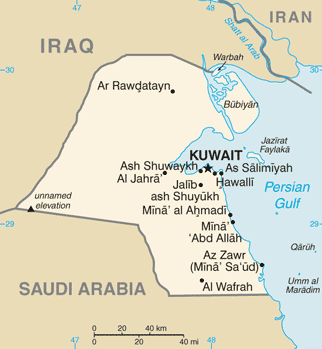
- Feature image source: CIA World Factbook map of Kuwait, public domain, via Wikimedia Commons.
This article is for educational purposes only and is not financial advice.
Risk Watch headlines are where process matters. ChartDojo helps you practice catalyst reading, timing and trade review with AI-powered feedback, so you build real skills, not bad habits. Start a free trial at chartdojo.io/register.