
By Ulysses Cornelius. Educational market analysis, not financial advice. Source context was checked at 9:15 a.m. ET on Tuesday, July 21, 2026.
Indian refiners halt Iraq oil loadings is the fresh physical-market signal traders should not ignore this morning. Bloomberg reported that Indian refiners halted Iraq oil loadings as Hormuz risks escalated, while Reuters reported that Indian Oil Corp cancelled a Basrah crude lifting amid attack risk around the Strait of Hormuz. This is a Risk Watch because the story moves beyond scary headlines and into actual procurement decisions by large crude buyers.
TL;DR
- Bloomberg reported that Indian refiners halted Iraq oil loadings as Hormuz risks escalated.
- Reuters reported that Indian Oil Corp cancelled lifting Iraqi crude from Basrah Oil Terminal, and Reuters-syndicated Economic Times coverage said Mangalore Refinery and Petrochemicals made a similar cancellation.
- CNBC reported Brent crude was up 1.1% near $90.20 and WTI was up 1.1% near $84.13 as traders weighed fresh U.S.-Iran strikes, tanker attacks and Houthi threats against Saudi shipping.
- The market signal is bigger than one cargo. Traders are watching whether Gulf crude buyers start rerouting, delaying or paying more to secure supply.
What happened
Bloomberg's high-priority markets feed reported at 13:02 GMT that Indian refiners halted Iraq oil loadings as Hormuz risks escalated. The report landed after a Reuters story said Indian Oil Corp cancelled lifting Iraqi oil from Basrah Oil Terminal because of increased risks and attacks in the Strait of Hormuz. Economic Times carried the Reuters report and said Mangalore Refinery and Petrochemicals Ltd also cancelled similar Iraqi oil lifting plans.
That matters because Basrah is not a marginal reference point for Asian crude buyers. Iraqi barrels are a major part of the Gulf supply mix, and India is one of the world's largest crude importers. When refiners cancel liftings, the trade shifts from risk pricing to physical logistics: ships, insurance, replacement barrels and delivery timing.
The wider conflict backdrop remains active. CNBC reported that the U.S. completed another round of strikes against Iran on Monday evening and that U.S. Central Command said the strikes targeted Iranian command centers, maritime capabilities, missile and drone launch sites, and air defense systems. CNBC also reported that Iran attacked a tanker in the Strait of Hormuz early Tuesday, forcing its crew to abandon the vessel.
Oil prices reflected that tension. CNBC reported Brent crude futures with September delivery were last up 1.1% at $90.20 per barrel, while August WTI futures were up 1.1% at $84.13. A futures contract is an agreement to buy or sell a commodity later, and traders use Brent and WTI as the main global and U.S. crude benchmarks.
Why Indian refiners halt Iraq oil loadings matters for markets
This is a supply-chain confirmation signal. Traders already knew Hormuz was dangerous. The new issue is that large buyers appear to be changing behavior because of that danger. A headline about missiles can fade quickly. A cancelled loading creates operational consequences that can ripple through freight markets, refinery schedules and regional crude spreads.
The Strait of Hormuz usually handles a large share of global oil traffic. CNBC cited the waterway as handling around 20% of the world's oil traffic in normal conditions. When attacks near that route affect loading decisions, the market has to price more than the chance of a headline shock. It has to price the cost of workarounds.
That is why Brent near $90 deserves attention even if U.S. equities remain calm. Oil is both a commodity and an inflation input. If crude stays lift, transportation costs, gasoline prices and inflation expectations can become part of the equity tape again. If crude fades on ceasefire progress, the same story can unwind quickly.
When we review fast-news drills in internal chartdojo.io logs, this is where traders often get sloppy. They treat every Gulf headline as the same trade. The cleaner read is to separate military escalation from physical market response. A cancelled Iraqi lifting belongs in the second bucket, which makes it harder to dismiss.
Implications for the most impacted trader cohorts
Oil futures traders have the cleanest read. Brent holding above or near $90 would tell the market that risk premium is staying in the curve. A quick retreat would say traders still expect diplomacy, spare capacity or rerouting to absorb the shock.
Energy equity traders should watch integrated majors, refiners and tanker-linked names. Higher crude can help producers, but refiners may face awkward input costs if replacement barrels arrive late or at a premium. Asian refiners are especially sensitive to Gulf loading disruptions because their crude slates are built around reliable seaborne flows.
Stock-index traders should watch whether oil starts pressuring breadth. A contained crude move can leave the S&P 500 and Nasdaq focused on earnings. A sustained oil move can revive inflation anxiety and pull transport, consumer discretionary and rate-sensitive shares into the story.
Crypto traders should treat this as a macro risk input rather than a crypto-native catalyst. Bitcoin and ether can weaken if geopolitical stress turns into dollar strength or broad de-risking. They can also hold up if the market treats the oil shock as contained.
Potential positives vs negatives from this catalyst
Potential positives:
- Diplomacy could cool the trade quickly. CNBC reported that regional mediators were pushing a 10-day ceasefire proposal between Washington and Tehran.
- Replacement barrels and route adjustments could limit refinery disruption if the cancelled liftings are isolated.
- Energy producers may benefit if crude holds firm without causing a broader demand scare.
Potential negatives:
- More buyers could delay or cancel Gulf loadings, which would turn a one-refiner issue into a regional procurement problem.
- Freight and insurance costs could rise if tanker attacks continue near Hormuz.
- A lasting move above $90 Brent could revive inflation pressure and weigh on consumer-facing stocks.
What could happen from here
Base case: The cancellations stay limited, Brent holds a geopolitical premium, and traders wait for confirmation from shipping data and refinery comments. Confirmation would come from more reported changes to Gulf crude liftings. Invalidation would come from Indian refiners resuming Basrah loadings and Brent slipping back below the latest risk range.
Upside case for risk assets: A ceasefire proposal gains traction, tanker attacks slow, and oil gives back part of the risk premium. That would help index futures by reducing the inflation channel. Confirmation would come from official ceasefire progress and lower freight or insurance stress. Invalidation would come from another confirmed vessel attack.
Downside case: More refiners cancel Gulf liftings, Houthi threats against Saudi shipping widen the problem, and Brent breaks higher as traders price a longer disruption. Confirmation would come from additional buyer cancellations, higher tanker rates or official warnings about port operations. Invalidation would come from steady vessel traffic and stable delivered crude pricing.
What to watch next
- Fresh Reuters, Bloomberg or official company confirmation on whether Indian Oil Corp, MRPL or other refiners resume Basrah liftings.
- Brent's reaction around $90 and WTI's reaction around the mid-$80s, especially after U.S. inventory and refinery-utilization data.
- Shipping-risk signals from the Strait of Hormuz and Bab el-Mandeb, where CNBC reported Houthi threats against Saudi shipping.
- Related ChartDojo context: CPC Black Sea Oil Halt Puts Crude on Risk Watch and Market Open Risk Map: Oil, Earnings, Canada Tariffs.
Sources
- Bloomberg Markets: Indian Refiners Halt Iraq Oil Loadings as Hormuz Risks Escalate.
- Reuters: Indian Oil Corp cancels Iraq oil lifting amid attacks, sources say.
- Economic Times, carrying Reuters: Indian Oil Corp cancels Iraq oil lifting amid Hormuz attacks, sources say.
- CNBC: U.S. strikes Iran and Houthis threaten Saudi Arabia shipping as mediators push 10-day ceasefire.
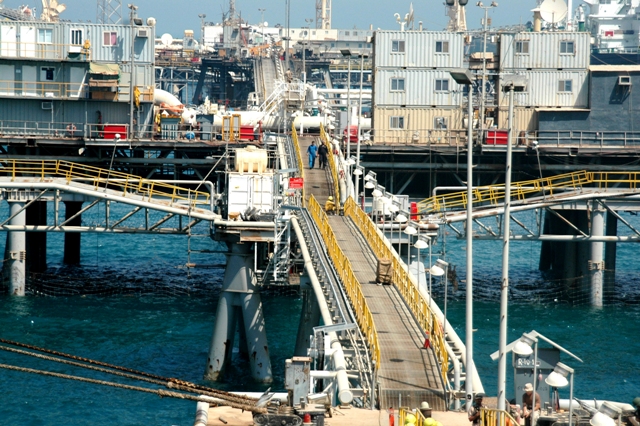
- Feature image source: Al Basrah Oil Terminal, U.S. Navy photo by Mass Communication Specialist 2nd Class Lenny M. Francioni, public domain, via Wikimedia Commons.
This article is for educational purposes only and is not financial advice.
Risk Watch headlines are where a repeatable process matters most. ChartDojo helps you practice catalyst reading, timing and trade review with AI-powered feedback, so you build real skills, not bad habits. Start a free trial at chartdojo.io/register.