
Reporting checked October 31, 2026, at 12:10 p.m. ET. Educational analysis, not financial or legal advice.
Election prediction market insider-trading scrutiny intensified after Senators Elizabeth Warren and John Curtis asked Kalshi and Polymarket to explain safeguards against insider trading, manipulation and use of material nonpublic information. As of 12:10 p.m. ET on October 31, the inquiry is a request for information. It is not a trading ban or a CFTC enforcement order.
TL;DR
- A bipartisan Senate inquiry asks Kalshi and Polymarket how they detect improper activity in election contracts.
- CNBC reported research showing sharp, short-lived price jumps in some election markets. The data identifies market-quality risk, not proof of manipulation in any specific trade.
- Traders should separate a visible contract price from a reliable forecast by checking depth, public-news timing and how long a price move lasts.
- The next useful signals are the platforms' responses, any CFTC action and changes to surveillance or participant restrictions.
Election prediction market insider trading: what happened?
The Senate Banking Committee release says Warren, the committee's ranking member, and Curtis wrote to Kalshi CEO Tarek Mansour and Polymarket CEO Shayne Coplan. They requested information about controls intended to prevent insider trading, market manipulation and wagers based on material nonpublic information.
The Hill independently reported the bipartisan inquiry. The letter adds political pressure before the 2026 midterm elections, but it does not itself change contract availability or settlement rules. A congressional request, a CFTC investigation and an enforcement order are different procedural steps.
The inquiry also arrives after ChartDojo's October 27 review of 2026 midterm prediction markets. That earlier article focused on quoted probabilities and contract definitions. The new development concerns the quality of the trading process behind those prices.
Why the inquiry matters to prediction-market traders
A binary event contract usually trades between $0 and $1. A price of $0.62 is often read as a market-implied probability near 62%, before fees and spread costs. That shorthand is useful only when the price reflects a reasonably competitive order book.
CNBC reported an Anti-Corruption Data Collective analysis of 167 congressional markets on Kalshi and Polymarket International with more than $100,000 in value. Thirty-eight, or about 23%, experienced a price spike of at least 30 cents. CNBC also reported that 88% of roughly 18,000 active congressional markets across three venues could be moved by 10 cents with a single wager under $1,000.
Those figures do not establish a trader's intent. A large order can reflect new public information, a strong opinion or poor execution. The practical lesson is narrower: a displayed probability may be fragile when depth is thin, and a fast price jump can be mistaken for broad market agreement.
For active traders, this is an execution issue. For readers who use market prices as forecasts, it is an information-quality issue. Kalshi told CNBC that prices in its cited examples corrected quickly. CNBC also described platform surveillance measures, public trade feeds and labels intended to flag low-activity markets.
A five-check election-market integrity exercise
This ChartDojo exercise turns a dramatic price move into a reviewable decision. Use a historical contract snapshot or replay. Do not place a live order merely to complete the exercise.
- Fix the contract definition. Record the exact question, close time and official resolution source. A related headline may have no bearing on the settlement wording.
- Measure executable depth. Note the best bid, best ask and available contracts at each level. A last-traded price can overstate what another trader could buy or sell.
- Build a timestamp. Mark the first large move, then identify the earliest reputable public report that could explain it. Use publication time rather than the time an alert reached you.
- Compare venues carefully. Check another platform only if its question and deadline match. Different settlement language can create a legitimate price gap.
- Test persistence. Record the price after 10 seconds, 10 minutes and two hours. A move that reverses at once carries less forecasting information than one supported by new depth and continuing volume.
Score each check as verified, unclear or failed. If two fields remain unclear, treat the displayed probability as low-confidence evidence. This approach complements ChartDojo's source-first prediction-market news workflow.
Potential positives vs negatives
Potential positives
- Detailed platform responses could clarify surveillance thresholds and restricted-participant rules.
- Clearer low-liquidity labels may help users distinguish a thin order book from a broad consensus.
- Public scrutiny may improve audit trails and reporting channels for suspicious activity.
Potential negatives
- Rules imposed quickly could reduce liquidity or remove contracts before replacement standards are clear.
- Thin markets can still produce misleading visual jumps even when no rule is broken.
- Political claims about a market price may spread faster than corrections in the order book.
What could happen from here
Base scenario
Kalshi and Polymarket provide information about existing controls, while election contracts continue under current rules. This path is supported if access and contract terms remain unchanged. It weakens if the CFTC opens a public enforcement matter or a platform restricts listings.
Upside scenario for market quality
Platforms publish clearer surveillance policies, participant limits and liquidity warnings. Confirmation would include dated rule updates or product notices that users can inspect. The case weakens if responses remain general and no operating change appears.
Downside scenario
Evidence of prohibited trading prompts enforcement, tighter access or contract suspensions. Confirmation requires an official regulator document or a platform notice. Headlines that repeat the senators' questions without a new filing do not confirm this path.
What traders should watch next
- Any public response from Kalshi or Polymarket that identifies concrete surveillance or eligibility changes.
- CFTC releases, advisories or enforcement records tied to election event contracts.
- Order-book depth and price recovery around major election news, especially in contracts with low activity.
- Whether settlement wording or participant restrictions change before Election Day.
Related market-integrity rules can be narrower than a platform-wide restriction. ChartDojo's report on the Pentagon nonpublic-information prediction-market directive shows why traders should identify who is covered before assuming every participant faces the same rule.
FAQ
Did the Senate ban election prediction markets?
No. The senators requested information from Kalshi and Polymarket. A request for information does not suspend trading or settle the legal debate over election contracts.
Does a sudden odds change prove insider trading?
No. It shows that orders changed the available price. Determining intent requires evidence about the trader, information timing and applicable rules. Traders can still assess the move's reliability by checking depth and persistence.
Are prediction-market prices the same as polling forecasts?
No. Contract prices emerge from trading and can reflect liquidity constraints or participant positioning. Polls estimate voter preferences through a sampling method. Each source has different failure modes.
Sources
- U.S. Senate Committee on Banking, Housing, and Urban Affairs, October 30, 2026.
- CNBC: Inside suspicious election-contract trading, October 30, 2026.
- The Hill: Senators press Kalshi and Polymarket, October 30, 2026.
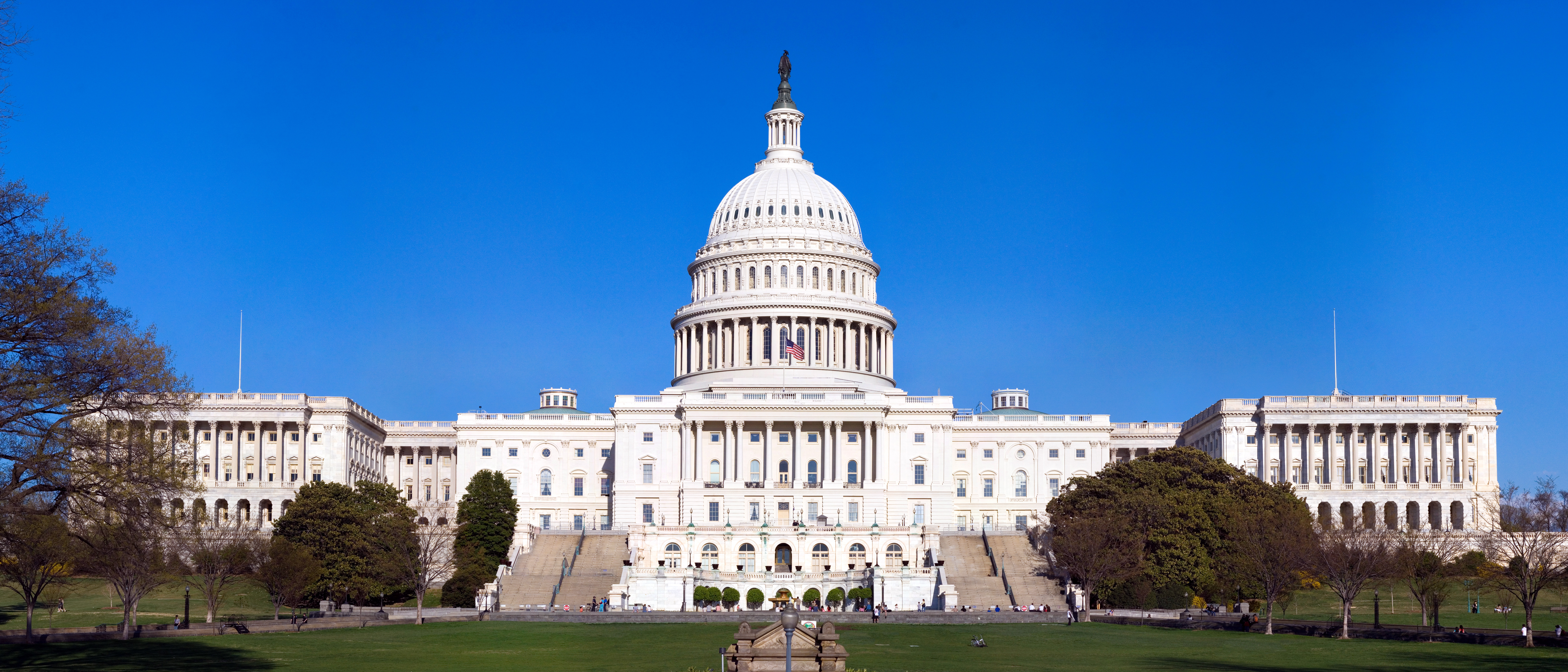
Feature image: western front of the U.S. Capitol by Noclip, public domain, via Wikimedia Commons.

Practice the evidence checks before risking capital. Start a free ChartDojo trial to build real skills, not bad habits, with structured practice and AI-powered feedback.