
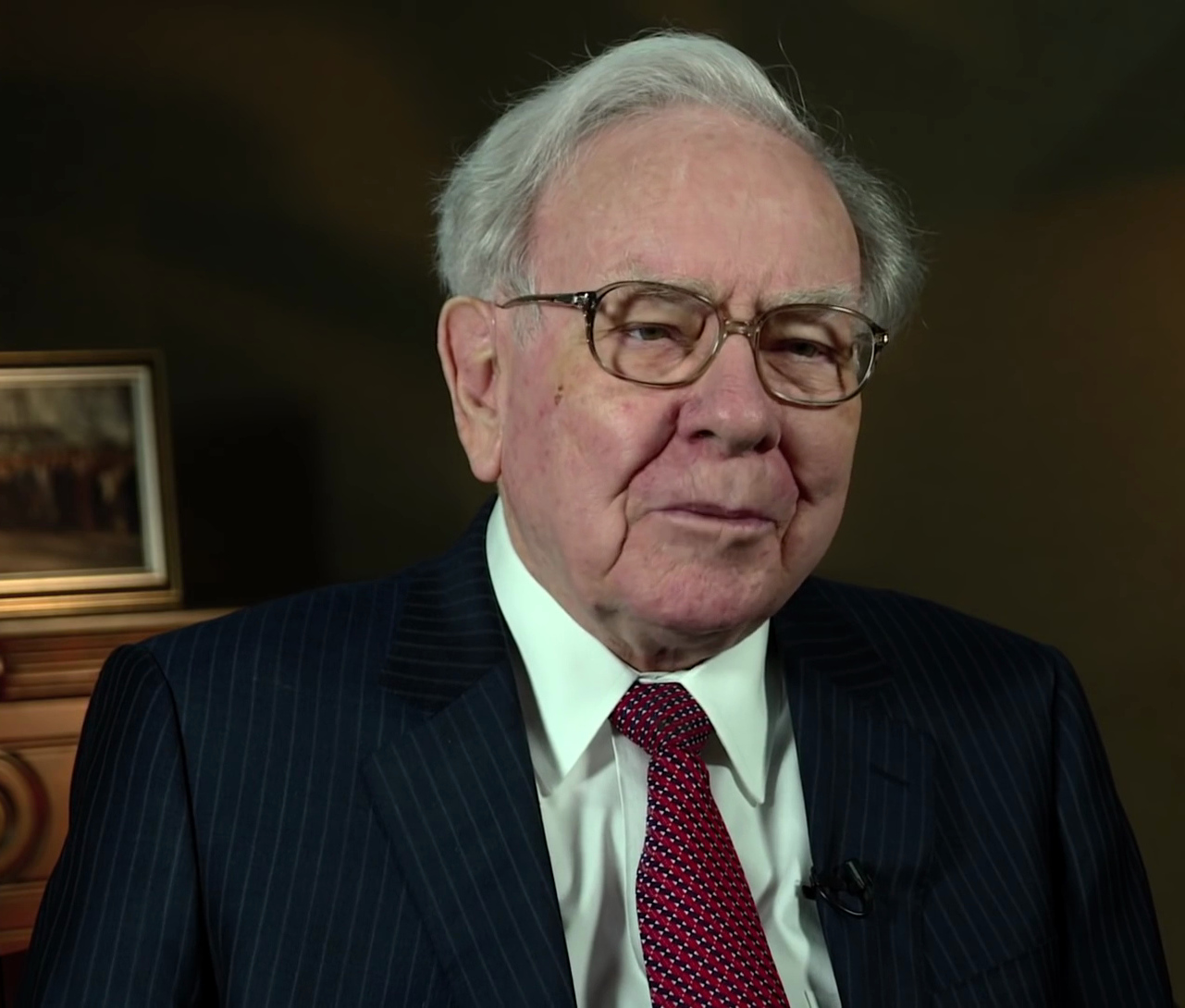
Warren Buffett steps down as chairman of Berkshire Hathaway effective immediately, the company announced on September 18. Howard Buffett succeeds him, while Greg Abel remains chief executive. Warren Buffett becomes chairman emeritus and stays on the board. For traders, the question is whether this final stage of succession changes expectations for capital allocation, rather than who runs the business today.
By Ulysses Cornelius. Sources checked September 18, 2026, at 12:14 p.m. ET. This is an educational governance risk watch, not financial advice. The calculation below uses hypothetical prices.
TL;DR
- Berkshire's chairman changes immediately. Its CEO does not.
- Warren Buffett retains a board seat; Howard Buffett takes responsibility for preserving the company's culture and values.
- Bloomberg reported Class B shares little changed in early Friday trading. That observation is not a current quote.
- Compare Berkshire's return with an index over the same interval before attributing a price move to the announcement.
What happened: Buffett steps down as chairman
Berkshire's release and shareholder letter separate the leadership responsibilities. The board elected Howard G. Buffett chairman. Warren E. Buffett becomes chairman emeritus and remains a director. Greg Abel continues as CEO.
Howard has been a director for 33 years, according to the letter. Warren Buffett describes his son's responsibility as protecting Berkshire's culture and values, while stating that Greg runs the company. Susan Decker continues as lead independent director, CNBC reports.
This follows Abel's assumption of the CEO job earlier in 2026. Treating Friday's announcement as another CEO replacement would misstate the event. The new information is the chairmanship and the formal reduction in Warren Buffett's role, with his board membership retained.
Why markets moved: separate succession from price evidence
The available early reaction was restrained. Bloomberg's report, republished by Insurance Journal, said Berkshire's Class B shares were little changed in early New York trading after a Thursday close of $509.20. It did not provide a precise timestamp for that early-trading observation. This article does not treat it as a noon price.
CNBC and Bloomberg both describe Berkshire's shares as having lagged the S&P 500 this year. That creates an important distinction: an existing performance gap cannot establish how much of Friday's trading reflects the chairmanship news.
Capital allocation means deciding where company funds go, including acquisitions or share repurchases. The succession question concerns confidence in those future decisions. A board announcement alone supplies no new earnings forecast and does not establish that Berkshire will change its repurchase pace.
Implications for stock and index-futures traders
For Berkshire stock traders, first verify the role change, then examine price behavior. A recognizable name can attract attention even when operating authority has already transferred. Record whether BRK.B moves differently from the broader market before assigning the news a directional meaning.
For index-futures traders, Berkshire is one company-specific input. Its headline does not establish a market-wide catalyst. Compare the index's movement and market breadth, meaning how many constituents advance or decline. The recent Fed rate decision is a separate influence that should not be folded into the succession story.
A role-to-price practice worksheet
Use this four-checkpoint exercise on a historical chart when the session is complete. It is a proposed practice method, not a report of a ChartDojo backtest or a claim that the platform supports Berkshire-specific replay.
- Write the fact before looking at the chart: chairman changes; CEO remains; departing chairman retains his director seat. Keep the release with the exercise.
- Select a common interval, such as the regular-session open to 10:00 a.m. ET. Record the stock and benchmark prices at both endpoints. Do not compare a premarket stock quote with an index's previous close.
- Calculate each percentage return, then subtract the benchmark return from the stock return. Keep the raw observations so the calculation is reproducible.
- Write the evidence that would invalidate your explanation. If the stock follows a broad market reversal without new company information, reduce confidence in a succession-only explanation.
For example, suppose normalized BRK.B prices rise from 100 to 100.4 while a normalized index falls from 100 to 99.4. The stock return is 0.4%; the index return is minus 0.6%. Subtracting them gives positive 1.0 percentage point of relative performance.
Formula: relative return = 100 × (stock end ÷ stock start − 1) − 100 × (index end ÷ index start − 1). These invented inputs demonstrate arithmetic only. This simple comparison does not adjust for the stock's usual sensitivity to the market and cannot prove that the announcement caused the difference.
Set the exercise's loss boundary before any simulated entry. Our guide to practicing a daily loss limit explains how to keep an event exercise from becoming an excuse to keep trading.
Potential positives vs negatives
On the positive side, the division of responsibilities is explicit. Abel continues running the business, while Howard takes the chairmanship after decades on the board. Warren Buffett's retained director seat preserves a formal channel for his judgment.
The risk is that clear titles do not settle investors' questions about future decisions. Shareholders still need evidence of disciplined capital deployment. A quiet first reaction also leaves room for later reassessment; it does not prove that the transition has no valuation effect.
What could happen from here
Base scenario: continuity
The transition remains a governance event, with no immediate change in operating policy. Subsequent company communications confirming existing responsibilities support this case. A new strategy announcement or another leadership change would invalidate the assumption of simple continuity.
Upside scenario: confidence improves
Later disclosures show capital decisions that shareholders receive positively, and Berkshire sustains relative strength across several observations. Those are conditions to test, not promised outcomes. Relative strength that disappears when the broader market weakens would undermine this reading.
Downside scenario: succession concerns persist
New disclosures raise questions about capital discipline, accompanied by persistent stock-specific weakness. That combination would strengthen a negative interpretation. Weakness that reverses without new company information would weaken the claim that governance concerns caused it.
What traders should watch next
- Check Berkshire's official releases for additional governance details or a separately announced change in capital policy.
- Compare BRK.B and the benchmark at matching times through Friday's close. Label delayed data explicitly.
- Keep any later repurchase or earnings disclosure separate from today's announcement until the company actually publishes it.
- Review the exercise after the session, including the decision to make no simulated trade when evidence is inconclusive.
FAQ
Is Howard Buffett replacing Greg Abel as CEO?
No. Howard becomes chairman. Greg Abel remains CEO and runs the company.
Is Warren Buffett leaving Berkshire's board?
No. Berkshire says he remains a director as chairman emeritus.
Sources
Berkshire Hathaway's September 18 release and letter establish the leadership changes. CNBC provides independent reporting and succession context. Bloomberg's report through Insurance Journal supplies the explicitly limited early-trading observation. Links appear beside the relevant claims above.
Feature image: Warren Buffett at the 2015 SelectUSA Investment Summit, USA International Trade Administration, public domain, via Wikimedia Commons. This archival photograph does not depict today's announcement.

Build real skills, not bad habits. Practice trading decisions with ChartDojo and AI-powered feedback. Start your free trial.