
TL;DR
- Oil prices fell more than 3% on Tuesday after The New York Times reported that the U.S. State Department plans to return evacuated diplomats to Middle East embassies.
- At about 8:15 a.m. ET, CNBC put Brent crude at $89.05 a barrel, down 3.4%, and West Texas Intermediate at $81.99, down 3.6%.
- The report points to lower immediate odds of renewed full-scale conflict, but it does not confirm a peace agreement or remove the risk of another military escalation.
- For traders, the useful test is whether crude holds below $90 while stock-index futures, Treasury yields and energy shares confirm the de-escalation move.
What happened: why oil prices fell today
Why oil prices fell today comes down to a fresh signal about Washington's view of Middle East risk. The New York Times reported on August 25 that the State Department is preparing to send diplomats back to embassies that were evacuated before and during the war with Iran. The paper cited an internal State Department document and said some personnel could return as early as this week.
CNBC linked the report directly to Tuesday's crude selloff. Brent, the global oil benchmark, dropped below $90 a barrel to its lowest level since August 13. WTI, the main U.S. crude benchmark, traded near $82. Both contracts extended Monday's decline.
The signal matters because diplomatic staffing is an operational decision, not a speech about negotiations. Returning personnel suggests that U.S. officials see less immediate danger of a renewed full-scale conflict. It is still an inference from a reported plan. The State Department had not publicly confirmed a durable ceasefire in the sources reviewed for this article.
Why markets moved
Oil carried a large war premium because attacks or restrictions around the Strait of Hormuz could interrupt physical supply. When the perceived chance of renewed fighting falls, part of that premium can leave the price quickly. The latest move was sharper because crude had already weakened on Monday after traders judged the new U.S. sanctions program as less disruptive to near-term supply than another military strike.
The Bloomberg Markets feed framed the cross-asset response clearly: stocks climbed as Brent below $90 gave bonds a lift. Lower crude can ease near-term inflation pressure because fuel and transport costs feed into business expenses and consumer prices. That can support Treasury prices, which move opposite yields, while also helping fuel-sensitive parts of the stock market.
The move does not settle the Iran risk. U.S. Defense Secretary Pete Hegseth said Monday that further strikes remained possible. China also said it would defend its interests after Washington announced sanctions aimed at Iran's trade network. Traders are pricing a lower immediate conflict risk, not a clean end to the dispute.
Implications for the most impacted trader cohorts
Oil and futures traders: Brent's break below $90 is the first test. A close below that level, followed by weak overnight rebounds, would show that the market is retaining the lower risk premium. A fast recovery above $90 would warn that the first reaction went too far.
Stock traders: Airlines, transports and other fuel-sensitive companies can benefit when crude falls, while oil producers may lag if the decline persists. Watch sector breadth rather than treating one large stock as proof of a wider rotation.
Rates traders: Lower oil can soften near-term inflation expectations. The cleaner confirmation would be a broad Treasury rally alongside weaker implied inflation measures, not a brief move in one maturity.
ChartDojo two-stage replay exercise
This exercise turns the headline into a decision process that can be reviewed later. Load a prior geopolitical oil session in market replay and hide the candles after the first news bar.
- Write the verified fact in one sentence. Keep the reported diplomat plan separate from any claim that the conflict is over.
- Mark Brent's pre-headline price and the first 15-minute low. Do not score the move until the next bar shows whether sellers still control the tape.
- Open an energy-sector chart and a Treasury futures chart. Record whether both markets confirm the same de-escalation reading.
- At the session close, grade the decision as supported by evidence, early, late or headline-driven. Note which observation would have changed the grade.
The point is to practice waiting for confirmation without losing track of the first market response. ChartDojo's earlier Iran sanctions risk watch laid out softer crude as the risk-asset upside case. The diplomat-return report now gives traders a concrete follow-up signal to test. For another de-escalation example, review the oil risk map after U.S.-Iran talks resumed.
Potential positives vs negatives
Potential positives
- Returning diplomats would support the view that Washington expects a calmer security environment.
- Lower crude can reduce cost pressure for transport companies and other heavy fuel users.
- A sustained drop in oil may ease part of the inflation premium embedded in Treasury yields.
- Less immediate Hormuz disruption risk can improve planning for shippers and refiners.
Potential negatives
- The reported staffing plan can be delayed or reversed if security conditions worsen.
- Further U.S. strikes remain possible, according to public comments from the defense secretary.
- Sanctions enforcement against major Chinese banks or refiners could revive supply and trade concerns.
- A sharp oil decline can pressure energy shares and regions that depend on producer spending.
What could happen from here
Base scenario: Diplomats return in stages while military activity stays limited. Confirmation would be Brent holding below $90, stable tanker traffic and improving stock-market breadth. A renewed strike warning or a quick Brent recovery above $90 would invalidate this path.
Upside scenario for risk assets: The staffing move is followed by direct diplomatic progress and fewer threats to Hormuz shipping. Confirmation would be another decline in crude, firmer transport shares and lower inflation compensation in bond markets. New sanctions against a large oil buyer or verified shipping disruption would invalidate it.
Downside scenario for risk assets: The return plan stalls and military escalation resumes. Confirmation would be a crude reversal, weaker index futures and renewed strength in energy shares. Public confirmation that diplomats have returned, paired with normal shipping flows, would weaken this scenario.
What traders should watch next
- Public confirmation from the State Department and the timing of any personnel return.
- Whether Brent settles below $90 and whether WTI holds below its Monday low.
- Tanker traffic and verified security reports around the Strait of Hormuz.
- Energy-sector breadth, transport shares and Treasury futures during the U.S. session.
FAQ
Why did Brent crude fall below $90?
Traders cut part of the Middle East war premium after a report that U.S. diplomats may return to evacuated embassies. The decision would suggest lower immediate odds of renewed full-scale conflict.
Does the oil drop mean the Iran conflict is over?
No. The report concerns diplomatic staffing, and further military action remains possible. Price action is reflecting reduced immediate risk rather than a verified settlement.
Sources
- CNBC: Oil drops more than 3% after diplomat-return report
- The New York Times: U.S. plans to return diplomats to Middle East embassies
- Bloomberg: Stocks climb as Brent below $90 gives bonds a lift
Educational analysis only. This is not financial advice.
Build real skills, not bad habits. Practice the next fast-market decision with a free ChartDojo trial and get AI-powered feedback on decision quality at chartdojo.io/register.
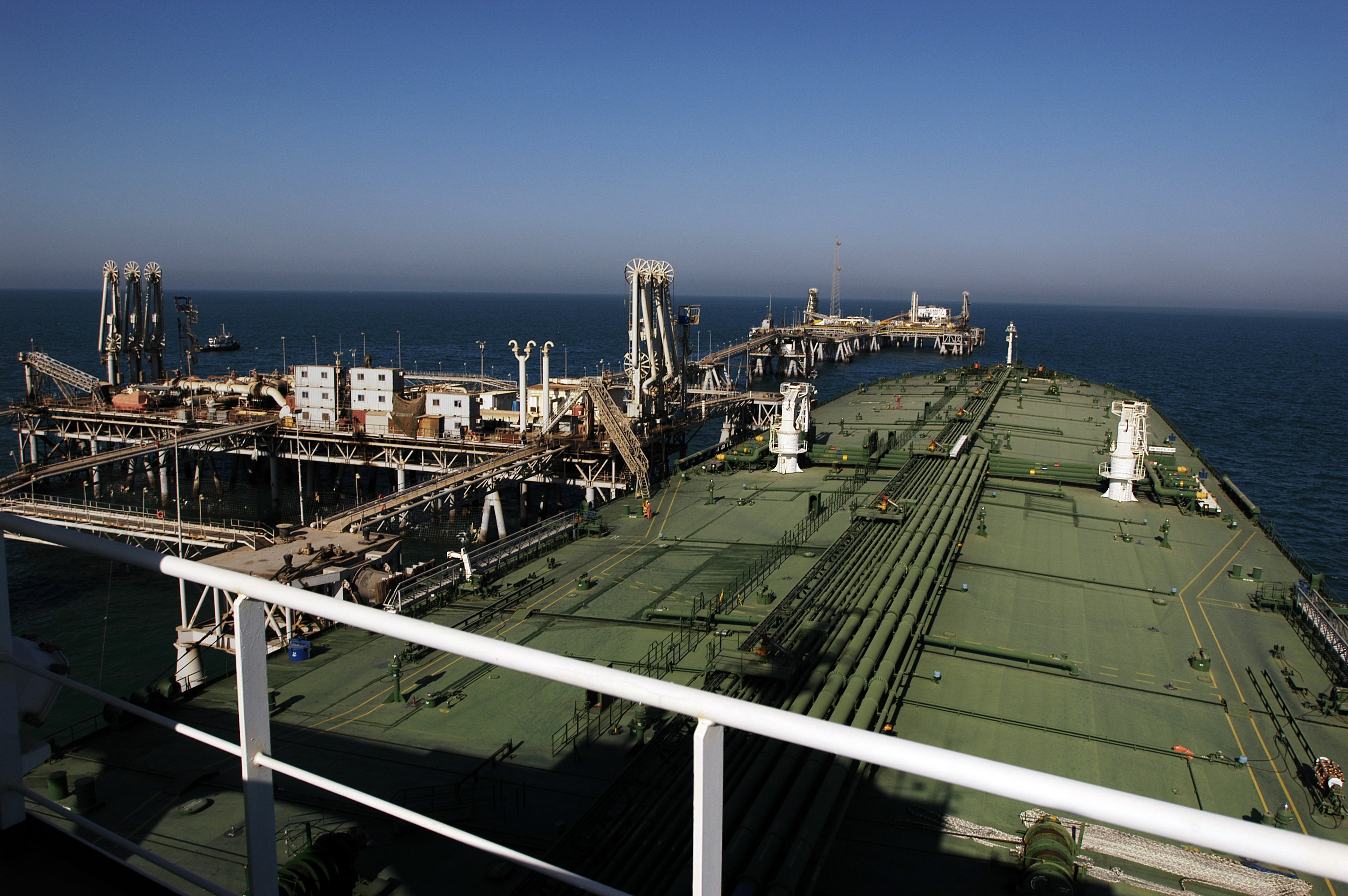
Header image: An oil tanker loads crude at the Al Basrah Oil Terminal in the Persian Gulf. U.S. Navy photo by Photographer's Mate Airman Eben Boothby, public domain, via Wikimedia Commons.
