
TL;DR
Walmart (WMT) reported fiscal Q1 2027 results before the open on Thursday, May 21, 2026, and paired them with a softer-than-expected outlook. The retailer flagged elevated gas and diesel prices weighing on consumer spending, a signal that lands while oil markets stay tense around US-Iran developments. The print is broadly cautious for retail, consumer discretionary, and index futures, and it tightens the link between the energy complex and the consumer trade going into Memorial Day.
What happened
Walmart issued a worse-than-expected outlook alongside its Q1 FY27 release on May 21, 2026, citing high gas prices pressuring shoppers, according to CNBC's earnings coverage. Heading into the print, Wall Street consensus sat near $174-175 billion in revenue and roughly $0.65-$0.66 in adjusted EPS, with comparable sales expected around the high-3% range.
The company's prior framework for FY27 had already leaned conservative: management guided net sales growth of 3.5% to 4.5% and adjusted operating income growth of 6.0% to 8.0% in constant currency, with adjusted EPS of $2.75 to $2.85. CFO John David Rainey had told investors when that framework was issued that the goal was to outperform the guidance, but that it was prudent to start the year with a level of conservatism given an unstable backdrop. Today's update keeps that cautious tone intact rather than upgrading it.
Walmart sits at the center of US household spending data because it touches a very large share of weekly grocery and essentials baskets. A cautious tone from this specific name is read by traders as a real-time consumer pulse check, not just a single-company story.
Why markets moved
The market reaction logic is straightforward. Walmart is treated as a proxy for the lower- and middle-income US consumer. When the company highlights gas prices as a drag on shoppers, traders translate that into softer discretionary spending, tighter margins for general merchandise peers, and a slower-revenue setup for retail names tied to non-essential categories.
The signal lands on a tape already adjusting to two other pressures. First, oil has been bid through the week on Iran-related supply risk, with broad coverage of Hormuz-related risk premium and Goldman flagging global oil stockpiles near an 8-year low. Second, the Federal Reserve's April meeting minutes, released this week, showed an unusually wide policy split, which keeps rate expectations volatile. A weaker consumer signal sharpens the slowdown side of that debate.
Equity desks usually respond to a Walmart miss-or-cut by rotating defensively within consumer staples, marking down discretionary peers, and reassessing margin assumptions for off-price and dollar-store names. Index futures take the read-through into the open, with the Russell 2000 typically more sensitive to consumer-cycle signals than the Nasdaq.
Implications for traders
Stocks: Watch general merchandise and discretionary names (Target, Costco, Dollar General, Dollar Tree, off-price retailers) for sympathy moves. Energy can stay firm if the gas-price narrative reinforces the supply story. Staples may see selective bid as a defensive hedge, but a true consumer slowdown eventually pressures volumes there too.
Futures: Index futures often react first via ES and RTY. The Russell tends to amplify consumer-cycle signals because of its higher domestic, lower-margin tilt. Crude futures stay tethered to Iran and Hormuz headlines; a softer-consumer narrative does not by itself break the geopolitical bid.
Crypto: Direct read-through is thinner, but Bitcoin and Ether often track risk appetite through the New York open. A weaker consumer signal that pressures equity futures can drag majors with it, while a defensive rotation that boosts the dollar tends to weigh on crypto as well. Watch BTC's reaction around the equity open for confirmation.
Potential positives vs negatives
Positives: A cautious outlook from Walmart can be a relief if results themselves came in line and the guidance is mostly a function of conservatism rather than deteriorating run-rate trends. Lower-income trade-down behavior historically benefits Walmart at the expense of mid-tier retailers, so share gains can offset margin pressure over time. Energy producers and refiners may see continued support if gas-price stickiness lingers.
Negatives: The combination of high pump prices, sticky inflation, and a wide-split Fed creates a tougher setup for discretionary retail. A weak read across consumer-facing names can pull the equal-weighted S&P below trend even as mega-cap tech holds the headline index up. Small-caps in particular can underperform on a consumer-slowdown narrative.
What could happen from here
Base case (next 24-72h): Walmart trades lower at the open with a 2-4% range, discretionary peers underperform staples, and ES drifts on the print without a regime change. Oil stays bid on Iran headlines, which keeps the gas-price story alive into the holiday weekend.
Upside case: Management commentary on the call reframes the outlook as conservative housekeeping rather than a real demand crack, and US comparable sales come in solid. WMT recovers intraday, retail breadth stabilizes, and the index closes flat to higher. Catalysts that confirm this path: stronger-than-expected US comps, reaffirmed EPS bracket, and constructive tone on advertising and membership growth.
Downside case: The call reveals broader pressure across categories, units, and lower-income cohorts. Discretionary peers gap lower, small-caps underperform, and front-month crude pushes higher on energy supply concerns. Catalysts that confirm this path: weaker US comps, explicit mention of basket compression, and a wider guidance trim.
What to watch next
- Walmart's earnings call commentary on US comparable sales, transactions versus ticket, and category mix.
- Pre-market reaction in Target, Costco, Dollar General, Dollar Tree, TJX, Ross, and off-price names.
- Energy complex price action, especially WTI and gasoline futures, into the US session.
- Index futures behavior at the cash open and around 10:00 ET when equity flows often settle.
- Any incremental US-Iran or Hormuz headlines that reinforce or break the energy-prices narrative.
- Consumer-sensitive credit names and high-yield ETFs (HYG, JNK) as a second-derivative risk read.
Sources
- CNBC: Walmart issues worse-than-expected outlook as high gas prices hit shoppers
- Walmart Investor Relations: FY2027 Q1 Earnings Release
- SEC EDGAR: Walmart Form 8-K Q4 FY26 (prior FY27 framework)
- Bloomberg: Stocks Fall as Hormuz Deadlock Lifts Oil, Yields
- CNBC: Iran reviews US peace proposal as Trump says he's willing to wait
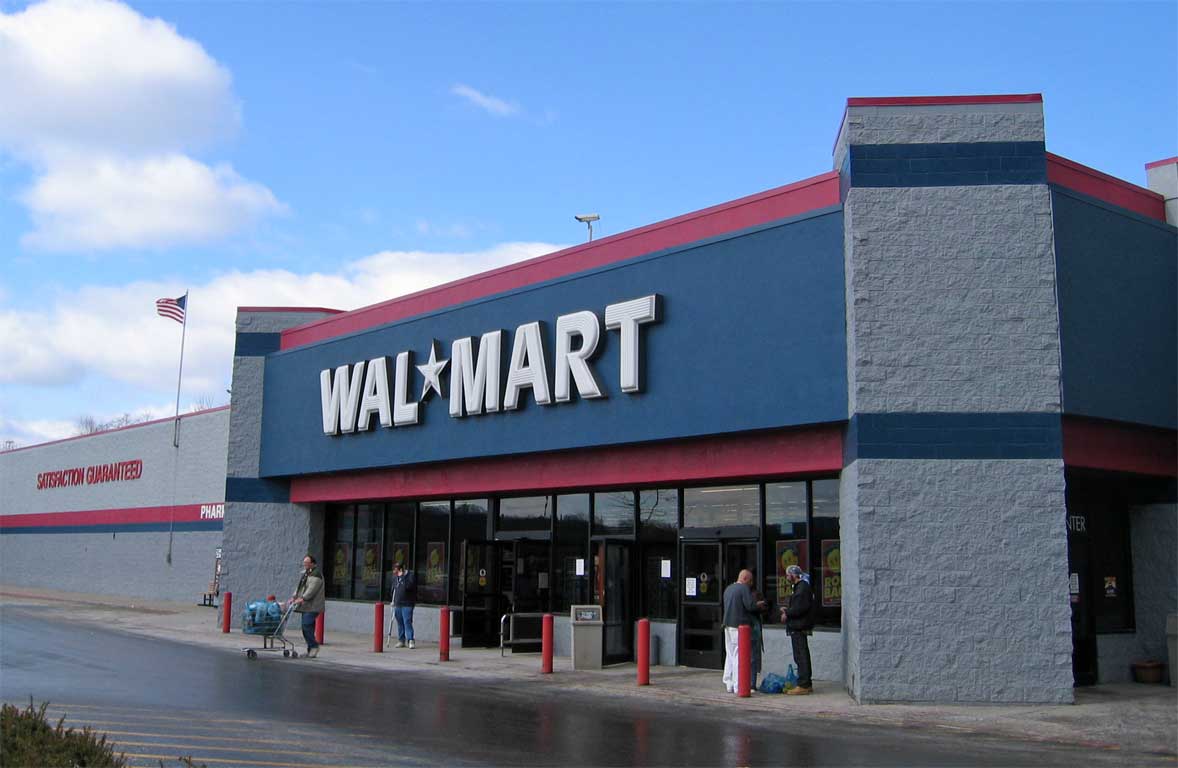
Feature image: Walmart_exterior.jpg by Jared C. Benedict via Wikimedia Commons, licensed under CC BY-SA 3.0.

Build real skills, not bad habits
Macro days like this one reward traders who size, plan, and review each setup with discipline. Start a free trial of ChartDojo and use AI-powered feedback on every trade to turn earnings-day reactions into repeatable habits, not random results.
Header image source: pexels by Luca Sammarco. License: PEXELS.