
By Ulysses Cornelius. Educational market analysis, not financial advice. Source context is current as of 12:10 p.m. ET on Saturday, July 11, 2026.
TL;DR
US stocks earnings test is the main setup for equity traders before the next session. Bloomberg reported that Wall Street is heading into a near-record earnings season with valuations already pricing a strong outcome. CNBC added that the S&P 500 was up 10.7% year to date, while underperforming software and mega-cap technology trades are drawing attention.
- The stock market has a high bar because broad gains already reflect confidence in earnings and AI spending.
- The cleanest equity read is whether banks, software, semiconductors, and mega-cap tech confirm the bullish tape.
- Traders should separate the earnings result from the stock reaction. Good numbers can still disappoint if guidance or margins look stretched.
US stocks earnings test for S&P 500 bulls
The US stocks earnings test matters because the market is entering reporting season with little room for sloppy guidance. Bloomberg described the setup as investors asking whether a near-record earnings season will be enough to keep the bull market running. The hurdle is whether companies can defend margins and second-half demand at prices investors already paid up for.
CNBC reported that the S&P 500 was up 10.7% year to date, while Berkshire Hathaway's B shares were down 1.8% and trailing the index by 12.4 percentage points. That contrast is useful for traders because it shows how concentrated leadership can distort the index read. The headline benchmark may look strong even while defensive or value-oriented sleeves lag.
At the same time, CNBC reported that ETF Action's Mike Akins is looking at underperforming areas such as software and mega-cap technology as possible second-half opportunities. That creates a clear tension. If earnings broaden out, laggards can help the rally. If demand looks weaker, the market may lean even harder on a narrow set of AI-linked winners.
What happened
The latest catalyst is the setup into earnings. Bloomberg's markets feed raised concern that stocks are already priced for an optimistic outcome. The same feed also carried the SK Hynix Nasdaq debut, where Bloomberg reported that shares rose 13% after the company raised $26.5 billion in the largest US first-time share sale by a foreign company.
That IPO matters for US equity traders because it sits directly inside the AI infrastructure trade. SK Hynix is tied to high-bandwidth memory, an important component used in AI servers. A successful listing signals that AI hardware risk appetite remains alive. It also raises the bar for proof that AI can keep supporting valuations across chips and cloud infrastructure.
CNBC's same-day coverage adds the second-half rotation angle. It points traders toward software and mega-cap technology groups that lagged the most powerful AI leaders. Together, these sources frame the next session as an earnings-quality test rather than a headline-index test.
Why markets moved
Stocks moved into this setup because investors have spent much of the year rewarding earnings resilience and AI-related growth. A valuation bar is the level of proof a company needs to justify its share price. When that bar rises, the reaction to earnings can become less forgiving.
Two checks matter first. Margin commentary will show whether companies can protect profits while labor, fuel, financing, and technology costs remain high. Capital spending commentary will show whether AI investment is still viewed as productive or is starting to worry investors. Guidance then shows whether demand is firm enough to support second-half revenue expectations.
When we tested earnings-season replay drills on chartdojo.io, traders handled this setup better when they wrote two plans before the report: one for the number and one for the reaction. A company can beat earnings and still sell off if guidance weakens. It can miss and still rally if the market was positioned for worse. That distinction is especially important when broad indices have already rallied.
Implications for the most impacted trader cohorts
Stock traders: The first read is breadth. If banks, software, semiconductors, and mega-cap technology all respond well to early reports, the rally has a better chance to broaden. If only a few AI leaders hold up, index strength may hide weak participation.
Index futures traders: S&P 500 and Nasdaq futures will be sensitive to earnings revisions and premarket reactions in large index weights. A calm futures tape after strong reports would confirm that investors still trust the second-half earnings path.
Options traders: Implied volatility, which is the market's expected price movement, can be just as important as direction. If earnings moves are smaller than options prices imply, premium sellers may regain control. If several large stocks gap beyond expected moves, volatility can stay bid.
Macro traders: Rates and the dollar still matter. If Treasury yields rise while earnings guidance softens, equity valuations face a tougher discount-rate backdrop. If yields stay contained, investors may be more willing to pay for growth.
Potential positives vs negatives from this catalyst
Potential positives
- Strong earnings guidance can validate the S&P 500's year-to-date gain and reduce concern that the rally is only multiple expansion.
- Software and other lagging technology groups could help broaden leadership if management teams show durable demand.
- SK Hynix's strong debut suggests investors still have appetite for AI infrastructure exposure when the story is backed by scale.
Potential negatives
- High valuations leave less room for vague guidance, margin pressure, or weaker second-half bookings.
- If AI-linked capital spending looks too expensive, the market may question returns across semiconductors, cloud, and software.
- A narrow rally can reverse quickly if a small group of mega-cap leaders fails to carry the index.
What could happen from here
Base case
The base case is a selective earnings season. Strong companies with clear margin control are rewarded, while expensive names with weaker guidance are sold. Confirmation would be stable S&P 500 futures and orderly single-stock reactions, with no broad jump in volatility. This path is invalidated if early reports trigger selling across both cyclical and technology leaders.
Upside case
The upside case is a broader equity rotation. Software, financials, industrials, and AI infrastructure shares all respond well to guidance, and laggards begin to close the performance gap. Confirmation would be stronger market breadth and Nasdaq futures holding gains after major reports. It is invalidated if the rally remains limited to a few mega-cap names.
Downside case
The downside case is an earnings-quality reset. Companies may beat current estimates but issue cautious guidance, discuss cost pressure, or pull back on spending plans. Confirmation would be falling index futures, widening single-stock declines, rising volatility, and weakness in both semiconductors and software. This case weakens if buyers step in quickly after guidance disappointments.
What traders should watch next
- Early earnings guidance: Revenue outlooks and margin language matter more than headline EPS beats.
- Financials: Banks can set the tone for credit, capital markets activity, and the consumer read.
- AI infrastructure names: SK Hynix, Nvidia, Micron, Broadcom, and semiconductor equipment shares remain important sentiment gauges.
- Software breadth: A recovery in lagging software would support the CNBC rotation argument.
- Rates and the dollar: A firm dollar or higher yields can pressure valuation-sensitive growth stocks.
FAQ
Why is this earnings season important for US stocks?
US stocks have already priced in a strong second half. Earnings now need to confirm that revenue and margins can support the rally.
Can good earnings still lead to a stock selloff?
Yes. If expectations are high, a stock can fall after a headline beat when guidance or margins fail to clear the market's valuation bar.
Sources
- Bloomberg: Stocks face an earnings test after strong pricing
- CNBC: Software and mega-cap technology could regain attention in the second half
- CNBC: Berkshire trails the S&P 500 as 2026 enters the second half
- Bloomberg: SK Hynix debut tests AI chip-cycle confidence
- Related ChartDojo context: AI chip selloff hits Kospi and Nasdaq futures and Trump Iran threat puts oil futures on Risk Watch.
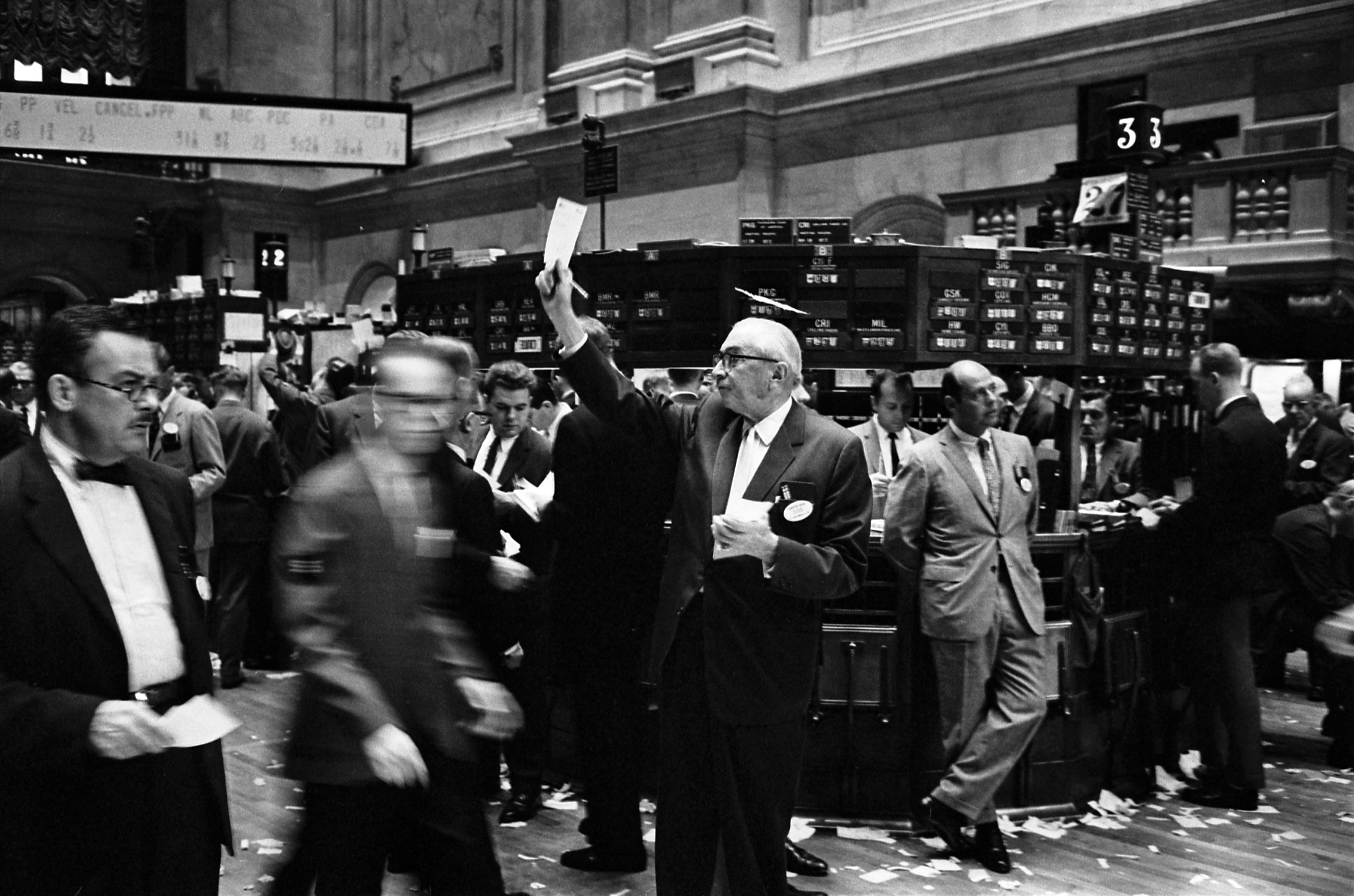
Image source: Wikimedia Commons, Thomas J. O'Halloran / U.S. News & World Report collection, Library of Congress, public domain.

Build real skills, not bad habits. If earnings season tempts you to chase every gap, use a free ChartDojo trial to practice scenarios, triggers, and invalidation with AI-powered feedback: https://chartdojo.io/register.