
As of about 4:10 p.m. UTC on Sunday, April 19, the cleaner US stocks setup is no longer just oil relief. Reuters, CNBC and Bloomberg all point toward a more specific question for traders: can a rally that is back at record highs keep broadening through earnings week, or does it stall once the easy rebound trade is over? Reuters said investors are heading into a heavy week of corporate results with the S&P 500 and Nasdaq already back at record peaks, while Bloomberg said technology has gone from the worst sector in the benchmark at the March 30 low to the best since then. CNBC added an important caution: short-term strength has improved sharply, but the technical foundation still looks fragile enough that selectivity matters. This is market analysis for educational purposes, not financial advice.
TL;DR
- Reuters said US stocks are entering a heavy earnings week after a stunning rebound to record highs, with technology outperforming again and the Russell 2000 also participating.
- Bloomberg said the technology sector has gone from worst to best since the March 30 low, with the Magnificent Seven rebounding sharply and helping drive the S&P 500 higher.
- CNBC said earnings may keep confidence elevated, but warned that strong short-term momentum is still sitting on a more fragile intermediate breadth backdrop.
- That combination matters because a rally led only by mega-cap tech is one kind of tape, while a rally that also includes smaller companies and lagging growth groups is a healthier one.
- The practical next-session question is whether earnings confirm the broadening move, or whether record highs start acting like a ceiling for the most crowded winners.
US stocks breadth test: What happened
Reuters framed the coming week around a simple but important fact: US equities have already shaken off the latest war scare and are moving into a dense stretch of corporate results from record territory. That alone raises the bar. When markets are climbing from a panic low, investors can reward relief. When they are already back at highs, companies and guidance usually have to do more of the work.
Bloomberg's market read helps explain why this matters. The firm said technology has swung from the weakest part of the S&P 500 at the March 30 bottom to the strongest group since then, with the biggest tech names helping power the index higher. That is not just a macro bounce anymore. It suggests leadership has re-formed quickly in the part of the market that still matters most for index direction.
Reuters also highlighted another useful detail from Friday's move: the Russell 2000 outperformed large caps and posted its own record close. That does not guarantee a durable breadth expansion, but it does change the character of the tape. A market that can lift both mega-cap technology and smaller domestic names is a better message than one that depends entirely on a narrow AI trade.
This is what makes today's stock setup distinct from ChartDojo's earlier US Stocks Risk Map. Yesterday's piece was about selectivity after the relief rally. Today's update is about whether improving breadth inside the rally can survive first-contact with earnings and guidance.
Why markets moved
The first driver is leadership. If the market's biggest technology names are reasserting themselves, index-level momentum can stay strong longer than skeptics expect. Bloomberg's read on the tech reversal is important because it suggests the group that hurt the most on the way down is again doing much of the lifting on the way back up.
The second driver is breadth. Reuters said small caps joined the move into Friday's close, which matters because broadening participation is one of the few things that can make record highs look less fragile. If traders start seeing follow-through in smaller cyclicals, software and other lagging growth areas, the move looks healthier.
The third driver is earnings quality. CNBC's week-ahead setup argued that results could reinforce confidence, but it also warned that the technical base underneath the rally is not bulletproof. In practice, that means beats alone may not be enough. Investors will likely care more about forward guidance, margin durability and whether management teams sound confident enough to justify fresh index highs.
Implications for the most impacted trader cohorts
Index futures traders: this is a classic breadth-versus-levels setup. Record highs can keep attracting momentum, but they can also become a spot where weak guidance gets punished faster than usual.
Technology and Nasdaq traders: leadership has returned, which is constructive, but it also concentrates risk. If large-cap tech keeps outperforming, the Nasdaq can stay firm. If leadership cracks, index support can disappear quickly.
Small-cap and domestic-growth traders: the Russell 2000 participation is one of the better signs in the tape. The key question now is whether it was a one-session catch-up move or the start of a broader risk-on handoff.
Earnings traders: the market is no longer grading results from a defensive crouch. Expectations are higher, and the penalty for weak guidance may be larger now that indexes are back at records.
Potential positives vs negatives
Potential positives:
- If more sectors participate beyond mega-cap tech, the market can absorb isolated earnings misses without losing the broader uptrend.
- If management teams validate demand and margins, traders may treat this rebound as a genuine earnings-led move rather than a short-covering snapback.
- If small caps keep confirming the move, breadth metrics could improve enough to reduce some of the "too far, too fast" concern around the rally.
Potential negatives:
- If the rally narrows back into only a few index heavyweights, record highs may start looking more vulnerable than they appear on the surface.
- If earnings beats come with softer guidance, investors may decide the easy upside from the rebound has already been captured.
- If traders rotate out of small caps and second-tier growth as soon as volatility returns, the breadth story could fade quickly.
What could happen from here
Base case: earnings are good enough to keep the S&P 500 and Nasdaq firm, but leadership stays concentrated in tech while the rest of the market lags somewhat. What confirms it: large-cap technology continues outperforming, the Russell 2000 holds most of Friday's gains, and major results avoid a guidance shock. What invalidates it: breadth rolls over quickly or multiple high-profile earnings reactions turn negative despite headline beats.
Upside case: the rally broadens further and the market treats earnings as proof that risk appetite can extend beyond the mega-cap core. What confirms it: stronger follow-through in small caps, software and cyclical groups, plus resilient Nasdaq and S&P futures after big reports. What invalidates it: leadership narrows again immediately or small caps give back their relative-strength breakout.
Downside case: traders decide the rebound has outrun the underlying earnings backdrop and start selling strength into record highs. What confirms it: weak post-earnings reactions, fading Russell participation, or a sharp loss of momentum in leading tech names. What invalidates it: broad participation improves and management commentary supports a stronger second-quarter setup.
What traders should watch next
- S&P 500 and Nasdaq futures: whether record-high momentum holds into the first major earnings reactions of the week.
- Russell 2000 relative strength: whether small caps keep participating or quickly revert to lagging behavior.
- Tech leadership: whether the same large-cap winners keep carrying the tape, or other growth groups start contributing more.
- Post-earnings price action: whether strong numbers actually get rewarded at these levels.
- Forward guidance: whether management teams sound confident enough to support valuations after such a fast rebound.
FAQ
Why does breadth matter so much when indexes are already at records?
Because a rally with broader participation is usually more durable than one led by only a few very large stocks. If small caps and additional growth sectors keep joining, the tape looks healthier.
What is the key risk for US stocks next session?
The key risk is that earnings do not match the optimism already embedded in record-high indexes. At these levels, guidance and reaction quality matter at least as much as the headline numbers.
This setup sits alongside ChartDojo's recent Hormuz market-open update, but the more actionable stock-specific question now is internal market quality, not just geopolitics. Build real skills, not bad habits. If you want to practice fast-moving equity setups with AI-powered feedback, start your free trial at ChartDojo.
Sources
- Reuters: Wall St Week Ahead: Surging record-high US stocks to wade deeper into earnings season
- Reuters: Stocks romp to records, oil plunges on hopes of US-Iran peace deal
- CNBC: Earnings poised to stoke confidence in a stock market that has rebounded to all-time highs. Here's what's ahead
- Bloomberg: Big Tech's $4 Trillion Boomerang Powers S&P 500 to New Heights
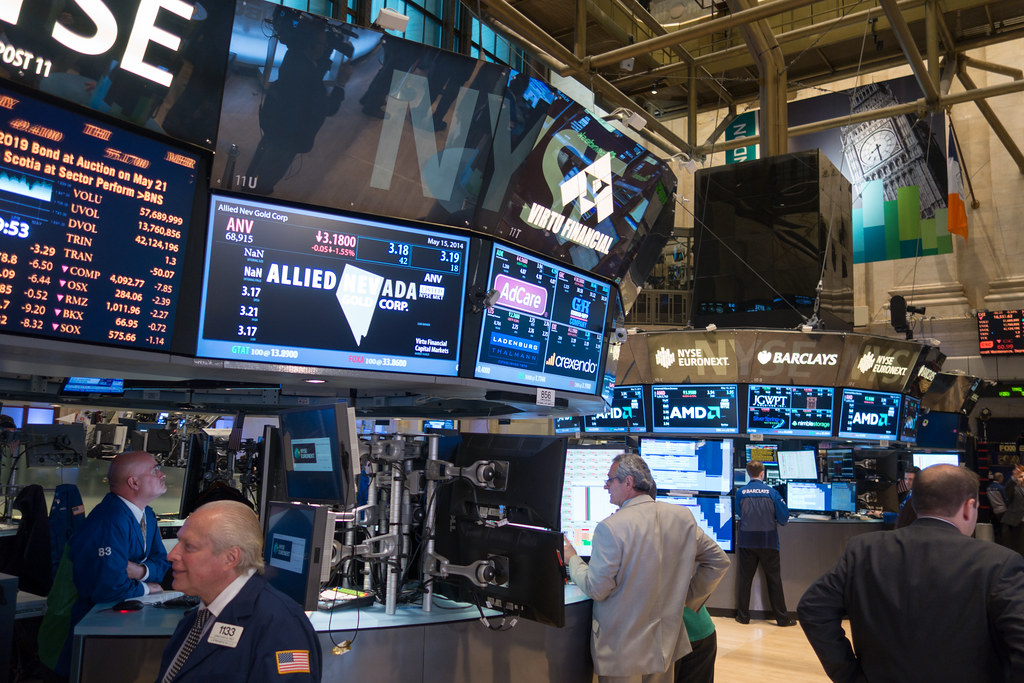
Header image: trading floor at the New York Stock Exchange, photo by Scott Beale via Wikimedia Commons, CC BY-SA 4.0.
Header image source: Wikimedia Commons, photo by Scott Beale. License: CC BY-SA 4.0.
