
By Ulysses Cornelius. Educational market analysis, not financial advice. Source context is current as of 10:00 a.m. ET on Monday, June 22, 2026.
TL;DR
- The Treasury Iran oil license is the fresh market catalyst after AP reported a 60-day waiver allowing Iranian oil production, delivery and sale through August 21.
- Axios reported that Iran agreed to let IAEA nuclear inspectors return, adding another de-escalation signal from the Switzerland talks.
- Brent was trading lower on June 22, with Trading Economics showing Brent around the high-$70s and down more than 3 percent on the day.
- The event matters most for oil, futures and macro traders because it changes the supply-risk balance after repeated Strait of Hormuz headlines.
- The trade still needs caution. The license reduces one risk premium, while implementation and regional security remain live variables.
What happened
The U.S. Treasury's new Iranian oil license gave traders a more concrete supply signal than the earlier peace-roadmap headlines. AP reported that Treasury issued a 60-day license waiving sanctions on Iranian oil, allowing production, delivery and sale until August 21, 2026. CNBC's high-priority markets feed also surfaced the same Treasury authorization shortly before 10:00 a.m. ET.
The timing matters because markets had already spent the overnight session pricing progress in U.S.-Iran talks. The new license shifts the story from general diplomacy toward a measurable oil-supply channel. It tells energy traders that sanctions relief is moving from negotiation language into an official transaction window.
Axios reported that Iran agreed to allow IAEA nuclear inspectors back into the country after talks in Switzerland. That adds a second de-escalation input, although technical negotiations are still continuing.
When we tested headline-driven crude setups on chartdojo.io, the cleaner reviews came from separating formal policy action from political signaling. This is one of those cases. A license with a dated window is easier to track than a vague promise of progress.
Why markets moved: Treasury Iran oil license and Brent
Oil moved because the license reduces the chance that Iranian barrels remain trapped by sanctions during the next two months. More available supply does not guarantee a smooth restart, but it changes the risk premium that traders had attached to the conflict.
Trading Economics showed Brent crude lower on June 22, around the high-$70s and down more than 3 percent on the day. That is enough to meet the market-transmission threshold for an energy flash post, especially because the catalyst is tied to U.S. policy and Middle East supply.
The move also follows a sharp swing in the narrative around the Strait of Hormuz. Earlier posts focused on shipping stalls, closure claims and talks. This update is different because the official U.S. action deals directly with oil flows. Even if Hormuz risk is not fully gone, the license gives traders a reason to price a lower supply-disruption tail.
The Guardian's business live coverage also framed the session around weaker oil prices and stronger global risk appetite on reports of progress in Iran-U.S. talks. That cross-asset setting matters because falling oil can ease inflation pressure, which can affect rate expectations and equity sentiment.
Implications for the most impacted trader cohorts
Oil and energy futures traders: The immediate question is whether Brent can hold below the prior war-risk range. A policy-backed supply signal can pressure prompt-month crude, but physical shipping, insurance and buyer behavior still decide how quickly barrels reach the market.
Equity-index traders: Lower oil can help broad risk appetite when the market reads it as de-escalation. That support is strongest for rate-sensitive growth shares and consumer sectors that benefit from softer fuel costs. It weakens if falling crude starts to imply demand stress instead of better supply.
Rates and dollar traders: Softer oil can reduce near-term inflation anxiety. If traders connect the license to lower headline inflation risk, Treasury yields may get some relief. The dollar reaction can stay mixed because geopolitical risk and rate expectations often pull in different directions.
Crypto traders: Bitcoin and Ethereum are secondary assets in this catalyst. They can benefit if the move lifts risk appetite, but the main signal is still in crude and rates rather than crypto-market structure.
Potential positives vs negatives
The positive case is straightforward. A valid 60-day license can bring more Iranian oil into legal channels, reduce uncertainty for buyers and shrink the war-risk premium in Brent and WTI. If inspectors return and technical talks keep moving, energy markets may continue to discount a less severe supply shock.
There is also a macro positive. Lower crude can relieve pressure on inflation expectations, which helps traders reassess the path for central banks. That does not mean rate cuts are automatic. It does mean the oil shock becomes less one-sided if the license is implemented.
The negative case is execution risk. A license is a policy door, not proof that every tanker, bank and insurer will act quickly. Some buyers may wait for more legal clarity. Shipowners may still demand higher compensation for regional risk.
The other risk is political reversal. If talks break down or violence widens, crude can reprice higher fast. A 60-day window creates a clock, and markets may become more sensitive to every headline as the deadline approaches.
What could happen from here
Base case, next 24-72h: Brent stays under pressure while traders verify the license details and watch whether Iran-linked shipments increase. Confirmation would be stable diplomatic language and crude holding near the lower end of the June range. Invalidation would be a renewed Hormuz disruption claim or a sharp reversal above prior resistance.
Upside case for risk assets: The license is followed by clearer inspection access and calmer shipping data. In that path, crude eases further and equities treat lower energy costs as helpful. Confirmation would come from Brent extending losses without a jump in volatility. Invalidation would be a breakdown in Switzerland talks.
Downside case: Markets decide the license is less useful than it looks because logistics, banking or regional security slow implementation. Brent could rebound as traders rebuild a supply premium. Confirmation would be rising tanker insurance costs, weaker shipment evidence or public disagreement between negotiators. Invalidation would be visible export flow and lower volatility.
What traders should watch next
Watch for the actual Treasury license text or OFAC guidance, because the details will define which transactions are covered. Traders should also track Brent and WTI settlement levels, tanker movements through the Strait of Hormuz and statements from Qatar, Pakistan and U.S. negotiators.
The second watch item is whether lower oil changes the rate conversation. If crude keeps falling, the inflation narrative may soften. If yields stay firm anyway, equity traders should avoid assuming that cheaper oil alone is enough to restart a broad rally.
ChartDojo's earlier US-Iran roadmap oil post gives the setup behind the first leg lower in crude, while the Hormuz shipping-stall update shows why traders cannot ignore transit risk yet.
Sources
Sources used for this flash include AP on the Treasury license, Axios on IAEA inspectors, CNBC and Bloomberg Markets RSS feed context, The Guardian's market live coverage and Trading Economics Brent pricing.
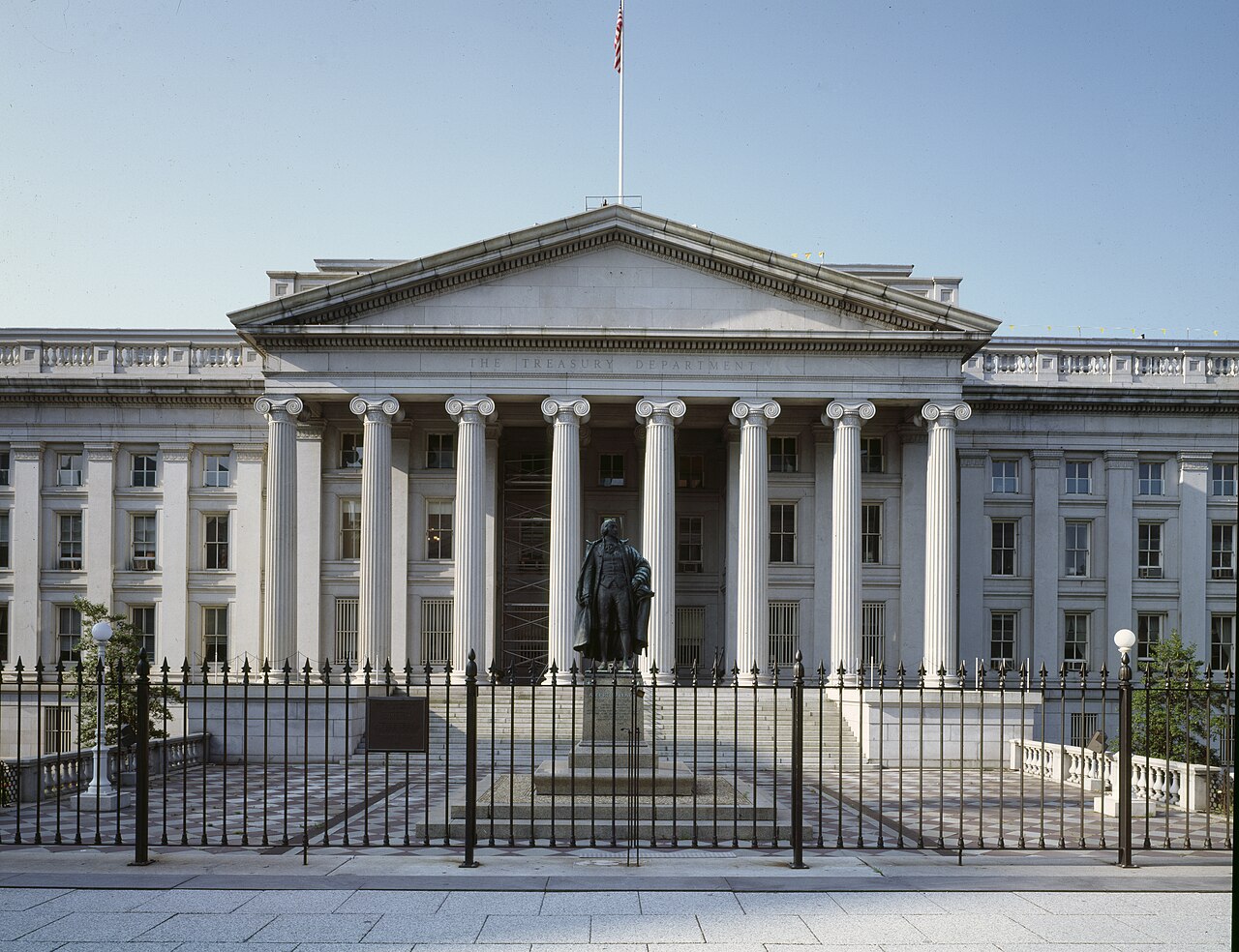
Header image: U.S. Treasury Department Building, Washington, D.C., photographed by Carol M. Highsmith. Library of Congress via Wikimedia Commons, public domain.
Build real skills, not bad habits. Start a free trial at ChartDojo and use AI-powered feedback to practice turning policy shocks, oil moves and cross-asset reactions into structured trade reviews.