
Oil became the clearest live market signal again on Thursday evening after Reuters reported that air defense systems were engaging reported hostile targets over Tehran and crude futures spiked as traders reassessed the risk of a broader escalation. CNBC later reported that Brent crude settled at $105.07 a barrel and West Texas Intermediate settled at $95.85, extending the latest repricing tied to the Strait of Hormuz standoff. This is a risk-watch setup, not a clean all-clear trend call. Some politically sensitive claims around Iran's negotiating team remain unconfirmed, so the right framework is to separate what is confirmed from what is still disputed. This article is for educational purposes only, not financial advice.
TL;DR
- Reuters reported that air defense systems were heard engaging reported hostile targets over parts of Tehran on Thursday evening, while another Reuters market report said crude futures briefly spiked about $5 a barrel during the move.
- CNBC reported that Brent crude closed at $105.07 and WTI closed at $95.85 as traders priced renewed Strait of Hormuz disruption risk.
- AP separately reported that President Donald Trump ordered the US military to 'shoot and kill' Iranian boats laying mines in the Strait of Hormuz, underscoring that the shipping standoff is still escalating rather than stabilizing.
- The confirmed market transmission is clear: oil is higher, shipping risk remains elevated, and US stocks have lost some of their recent calm as traders hedge renewed Middle East risk.
- The disputed part of the story is any claimed internal Iranian leadership split tied to negotiators. Traders should treat that piece as unconfirmed until more top-tier outlets verify it independently.
What happened
The fresh catalyst was a new evening escalation in the Iran-Hormuz story rather than a recycled summary of the same ceasefire backdrop. Reuters reported that air defense systems were heard engaging what were described as hostile targets in parts of Tehran on Thursday evening, citing Iranian media. In a separate Reuters energy market report, crude futures spiked as traders reacted both to those Tehran reports and to signs of political stress inside Iran.
At the same time, the shipping confrontation around the Strait of Hormuz remained unresolved. AP reported that Trump ordered the US military to target any Iranian boats laying mines in the strait, while the Pentagon released footage tied to another tanker seizure. Reuters also reported that Tehran was still refusing to reopen the strait while the US blockade on Iranian ports continues.
That combination matters because it joins three confirmed facts into one tradable macro picture: the strait remains under stress, military language is hardening, and oil prices are responding in real time. CNBC said Brent finished above $105 while WTI closed just under $96. Even if some political rumors around Iran's negotiating team fade, the broader energy-risk signal is already visible in price action and official statements.
Why Brent oil and risk assets moved
The simplest explanation is that traders are still repricing supply risk, shipping risk and policy risk at the same time. Roughly a fifth of globally traded crude and liquefied natural gas normally moves through the Strait of Hormuz. When the market sees active military threats around that corridor, the first response is usually a higher oil risk premium, which is the extra price traders demand to hold exposure through uncertainty.
That is what Thursday's move looked like. Reuters described a sharp intraday spike in crude after the Tehran air-defense reports. CNBC confirmed the session ended with Brent above $105. Those are not trivial moves. They tell traders that this is still a live macro transmission channel, not just a political headline with no market consequence.
The cross-asset angle matters too. Higher oil can pressure airline, transport and consumer-sensitive equities while also complicating the inflation outlook. That is why this story reaches beyond energy futures. Reuters' global markets coverage said Wall Street stocks were modestly lower as crude extended its climb and investors weighed both war risk and mixed earnings.
Implications for the most impacted trader cohorts
Oil and energy futures traders: this remains the cleanest first-order read. Brent above $105 and WTI near $96 keeps the market in escalation-watch mode. Traders should be prepared for gap risk, thin-liquidity spikes and fast reversals if diplomacy suddenly improves.
US index and equity traders: this is not a pure earnings tape anymore. Higher crude can quickly hit sector leadership, especially airlines, transports, industrials and other margin-sensitive names. The immediate question is whether oil becomes a manageable headwind or a fresh driver of broader de-risking.
Macro futures traders: this is the kind of setup that can pull crude, equity futures, volatility and Treasury yields into the same headline loop. A clean read matters because a risk-off move driven by geopolitics behaves differently from a move driven by economic data.
Crypto traders: bitcoin is not the lead asset here, but cross-asset stress can still affect weekend liquidity and broad risk appetite. If oil keeps rising and equity futures weaken, crypto may face a tougher backdrop even without a crypto-native catalyst.
Potential positives vs negatives
Potential positives
- Oil strength can continue supporting energy equities and commodity-linked momentum if the market keeps assigning a higher disruption premium.
- A clearly identified macro catalyst gives traders a more coherent framework than a market drifting on vague sentiment.
- If the Tehran reports do not develop into a broader strike cycle, some of Thursday's move could settle into a more orderly risk premium rather than a full panic repricing.
Potential negatives
- The Strait of Hormuz remains the central global chokepoint, so any real deterioration in shipping conditions could push crude higher again very quickly.
- Escalation in military language raises weekend headline risk and can make normal technical levels less reliable.
- Parts of the political narrative are still contested, which increases the chance of violent reversals if traders overreact to unconfirmed details.
- Higher energy prices can spill into inflation fears and weigh on the broader stock-market mood even if the direct battlefield news stabilizes.
What could happen from here
Base case: oil stays bid but stops short of another disorderly surge, while stocks and futures trade with a modest geopolitical discount. What confirms it: Brent holds near or above $100, shipping traffic remains constrained, and no meaningful diplomatic breakthrough emerges. What invalidates it: a verifiable de-escalation signal such as transit normalization, softer official rhetoric or confirmed talks resuming.
Upside case: energy markets push higher again and broader risk assets reprice more aggressively. What confirms it: new verified strikes, clearer evidence of shipping disruption, or another official step that tightens the standoff around Hormuz. What invalidates it: crude failing to hold the breakout zone and safe-haven flows fading quickly.
Downside case: Thursday's move becomes an overreaction to a mix of real stress and unconfirmed political claims. What confirms it: Reuters- or AP-level reporting shifts toward de-escalation, Brent gives back a meaningful part of the move, and equity futures recover without fresh tension. What invalidates it: persistent overnight stress and more official warnings tied to Tehran or Hormuz.
What traders should watch next
- Whether Brent can hold above $105 or whether the move fades once the latest Tehran headlines cool.
- Whether AP, Reuters or another top-tier outlet confirms any new concrete military action beyond reported air-defense activation.
- Whether ship traffic through the Strait of Hormuz shows any practical improvement or further disruption.
- How US index futures and airline or transport stocks react if crude stays elevated into the next session.
- Whether the disputed claims around Iran's internal negotiating politics gain independent confirmation or get walked back.
Sources
- Reuters: Crude oil futures jump on reports of air attacks, Iran power struggle
- Reuters: Iran shows off its control over strait, Israel warns of further attacks
- CNBC: Brent oil tops $105 as tensions simmer in Strait of Hormuz
- AP: Trump issues 'shoot and kill' order against Iranian small boats in Strait of Hormuz
- ChartDojo: S&P 500 Record High Meets $100 Oil: Stock Market Risk Map
- ChartDojo: Trump Hormuz Mine Order: Oil and Futures Risk Watch
- ChartDojo: US Intercepts Iranian Oil Tankers: Oil and Futures Risk Watch
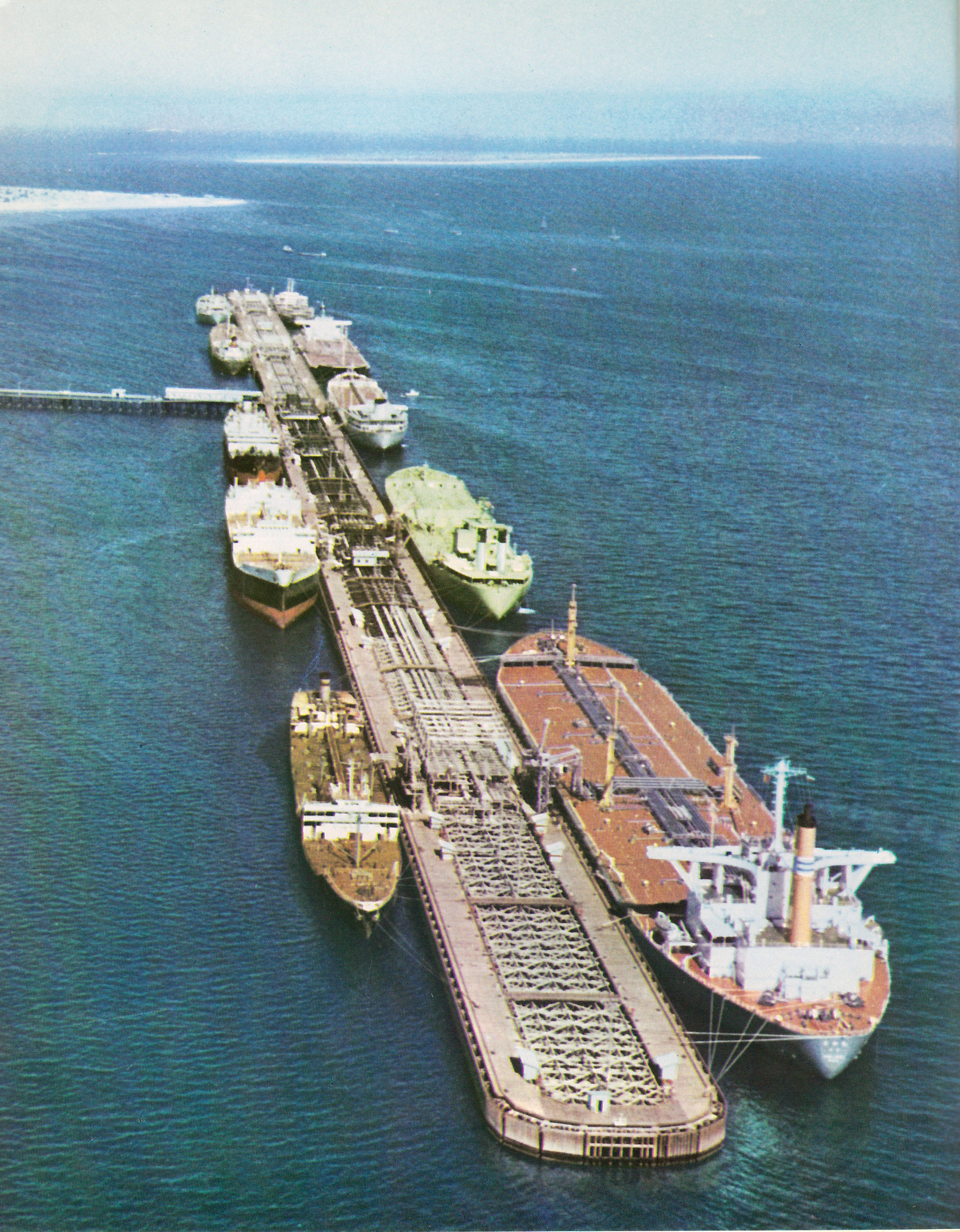
Header image source: Kharg oil loading terminal via National Iranian Oil Company, public domain, from Wikimedia Commons.
Build real skills, not bad habits. If you want AI-powered feedback on your trading decisions instead of learning from expensive mistakes, start your free trial at ChartDojo.