
By Ulysses Cornelius. Educational market brief, not financial advice. Source context is current as of 8:45 a.m. ET on Saturday, June 27, 2026.
TL;DR
- Nasdaq said Space Exploration Technologies Corporation, ticker SPCX, will become a Nasdaq-100 component before the market opens on Tuesday, July 7, 2026.
- Reuters reported that J.P. Morgan estimates the addition could draw about $4.3 billion in passive inflows as index funds adjust.
- The main trading issue is timing. QQQ-linked flows may cluster around the July 6 close, while SPCX volatility can spill into Nasdaq-100 futures.
- This is a flow-driven Risk Watch. The confirmed fact is the index entry. The market reaction depends on liquidity, positioning, and whether traders front-run the rebalance.
What happened in the SpaceX Nasdaq 100 inclusion
Nasdaq announced late Friday that SpaceX will join the Nasdaq-100 before the market opens on Tuesday, July 7. The company listed on June 12 under ticker SPCX, which makes the timing unusually fast for a company entering one of the most closely followed US equity benchmarks.
Reuters, in coverage syndicated by Investing.com and local news outlets, reported that Nasdaq confirmed the inclusion and that the move follows relaxed eligibility requirements covering profitability, time since initial public offering, and public float. Reuters also reported that J.P. Morgan estimates SpaceX could attract about $4.3 billion in passive inflows from the change.
That matters because the Nasdaq-100 is tracked by large products including Invesco QQQ and QQQM. Index-tracking funds usually need to own the new constituent near its benchmark weight. They also need to fund that purchase, which can mean selling small amounts of current holdings or using cash tied to normal fund flows.
MarketWatch separately reported that SpaceX was set to enter the Russell 1000 after Friday's close under FTSE Russell's fast-entry process. That adds another layer to the same story: newly public mega-cap stocks are reaching passive portfolios faster than they used to.
Why markets moved
This is not a classic earnings shock or Federal Reserve headline. It is a market-structure catalyst, which means the impact comes from how portfolios have to adjust.
The first channel is forced demand. If a product promises to track the Nasdaq-100, it needs exposure to the names in that index. A sub-1% weight can still create a large dollar order when the asset base is this large.
The second channel is substitution. Passive funds do not buy a new constituent in isolation. They rebalance the rest of the portfolio. For most current Nasdaq-100 members, the sale pressure may be small, but traders will still watch the largest growth stocks because they shape QQQ and Nasdaq futures.
The third channel is volatility around execution. Traders can buy ahead of the expected index demand, then sell into the actual rebalance. Options activity can make that move sharper if dealers have to hedge into thin liquidity.
When we tested this kind of flow event in chartdojo.io practice reviews, the clearest lesson was practical: traders need a plan before the closing auction, not a story after it. The useful questions are where the flow should appear, what invalidates the setup, and how much slippage the trade can tolerate.
Implications for the most impacted trader cohorts
SPCX traders: SpaceX can benefit from passive demand while still facing valuation risk. Reuters noted that Morningstar's Michael Field views the stock as overvalued, which is a reminder that index inclusion and fair value are different debates.
ETF traders: QQQ and QQQM are the cleanest products to watch because they track the Nasdaq-100. The July 6 close may be more important than ordinary intraday prints because rebalance activity often concentrates near the official effective date.
Futures traders: Nasdaq-100 futures may react if SPCX flow changes the tone in QQQ. The cleaner read will be relative performance against S&P 500 futures. If QQQ firms while SPY lags, traders may treat the event as Nasdaq-specific rather than a broad risk-on signal.
AI and growth-stock traders: SpaceX now sits in the same conversation as other expensive growth assets. Recent ChartDojo coverage of the SoftBank and AI-stock rout and the KOSPI chip-stock selloff showed how quickly crowded technology positioning can reverse. SpaceX adds a flow catalyst to that already sensitive tape.
Potential positives vs negatives from this catalyst
Potential positives:
- Index-tracking products may need to buy SPCX before the July 7 inclusion, which can support liquidity and near-term demand.
- A smooth rebalance would signal that markets can absorb a large new growth stock without a wider disruption in QQQ.
- More institutional ownership can improve visibility for SpaceX after its June listing.
- Traders get a defined catalyst window instead of an open-ended rumor cycle.
Potential negatives:
- Forced buying can be front-run. If traders buy too early, SPCX can fade once the rebalance is complete.
- Existing Nasdaq-100 components may face modest sale pressure as index products make room for the new member.
- If the broader technology tape stays weak, SpaceX may trade like another high-beta growth stock rather than a special situation.
- Thin float can amplify moves in both directions when passive and active orders collide.
What could happen from here (next 24-72h)
Base case: SPCX trades with lift volume into the July 6 close, QQQ absorbs the rebalance, and Nasdaq-100 futures treat the event as contained. This view is confirmed by steady spreads and no broad selloff in existing mega-cap constituents. It is invalidated if SPCX reverses hard and weakness spreads through QQQ.
Upside case: Traders start buying earlier, SPCX holds its bid, and QQQ outperforms the S&P 500 as growth appetite improves. Confirmation would come from stronger Nasdaq breadth and calmer action in AI-linked shares. This case weakens if SPCX rises while the rest of the index keeps slipping.
Downside case: The inclusion turns into a sell-the-news event. SPCX attracts short-term buying, then fades as passive demand is completed. Confirmation would be heavy volume on a failed breakout and renewed pressure in semiconductor or AI infrastructure names. The downside case loses force if SPCX holds firm after the rebalance.
What to watch next (next 24h)
- Any follow-up from Nasdaq on final eligibility, index weight, or related constituent changes.
- SPCX volume, spreads, and closing-auction behavior ahead of July 7.
- QQQ versus SPY relative performance, which can show whether the event is Nasdaq-specific or broad risk appetite.
- Options open interest in SPCX and QQQ, since dealer hedging can intensify intraday moves.
- Whether the Russell 1000 addition creates early flow before the Nasdaq-100 rebalance window.
FAQ
When will SpaceX join the Nasdaq-100?
Nasdaq said SpaceX will become a Nasdaq-100 component before the market opens on Tuesday, July 7, 2026.
Why does this affect QQQ?
QQQ tracks the Nasdaq-100. When the index adds a company, funds that seek to mirror the benchmark usually need to add exposure near the effective date.
Sources
- Nasdaq via GlobeNewswire: official SpaceX Nasdaq-100 inclusion announcement.
- Reuters via Investing.com: passive inflow estimate, QQQ context, and fast-track rule background.
- MarketWatch: Russell 1000 inclusion and fast-entry context.
- Nasdaq Newsroom: June listing context and first-day trading details.
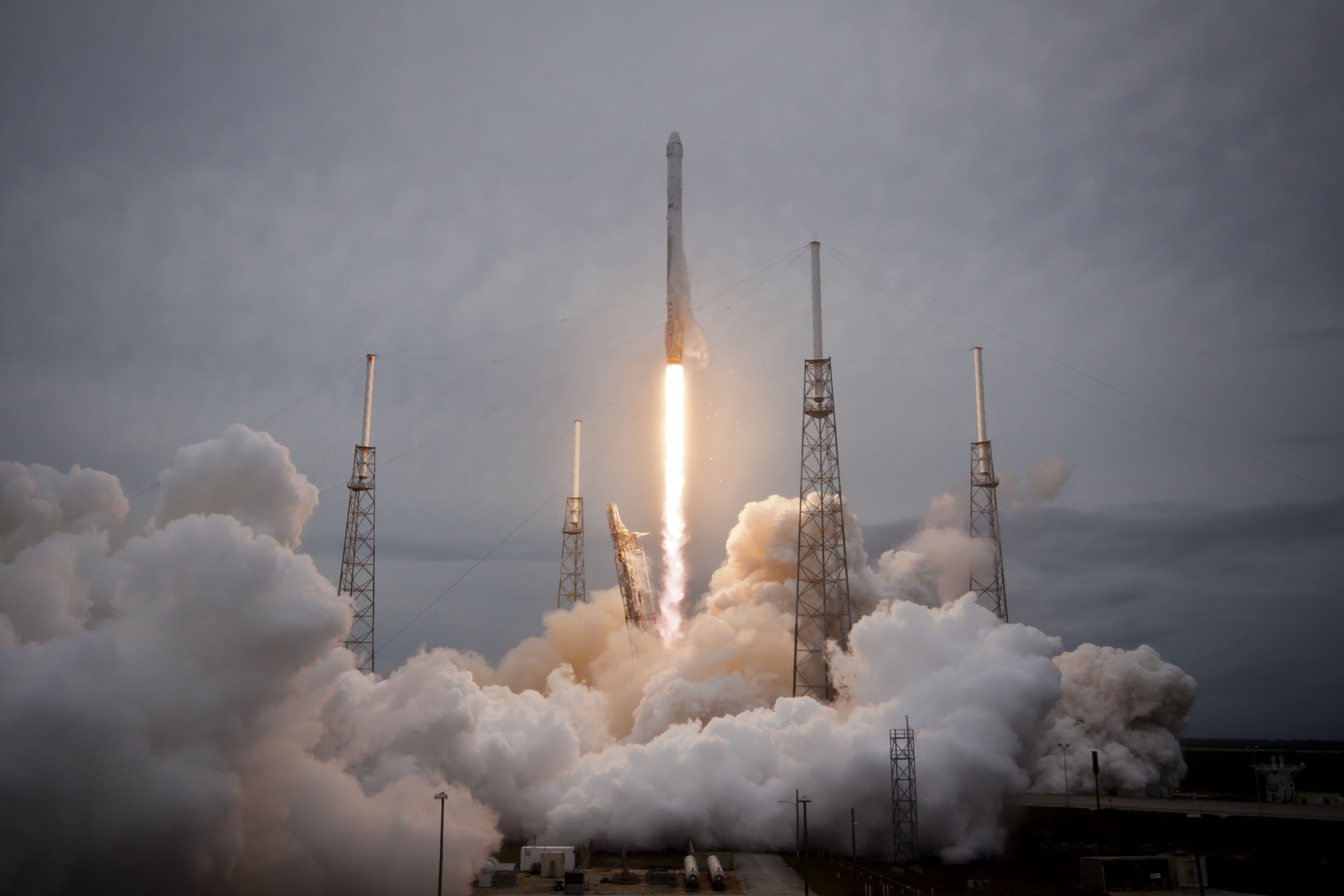
Feature image: SpaceX Falcon 9 launch. Source: Pixy.org, CC0 Public Domain.
ChartDojo helps traders build real skills, not bad habits. Use ChartDojo to practice market catalysts with AI-powered feedback, review your setups, and start a free trial before the next flow event tests your process.