
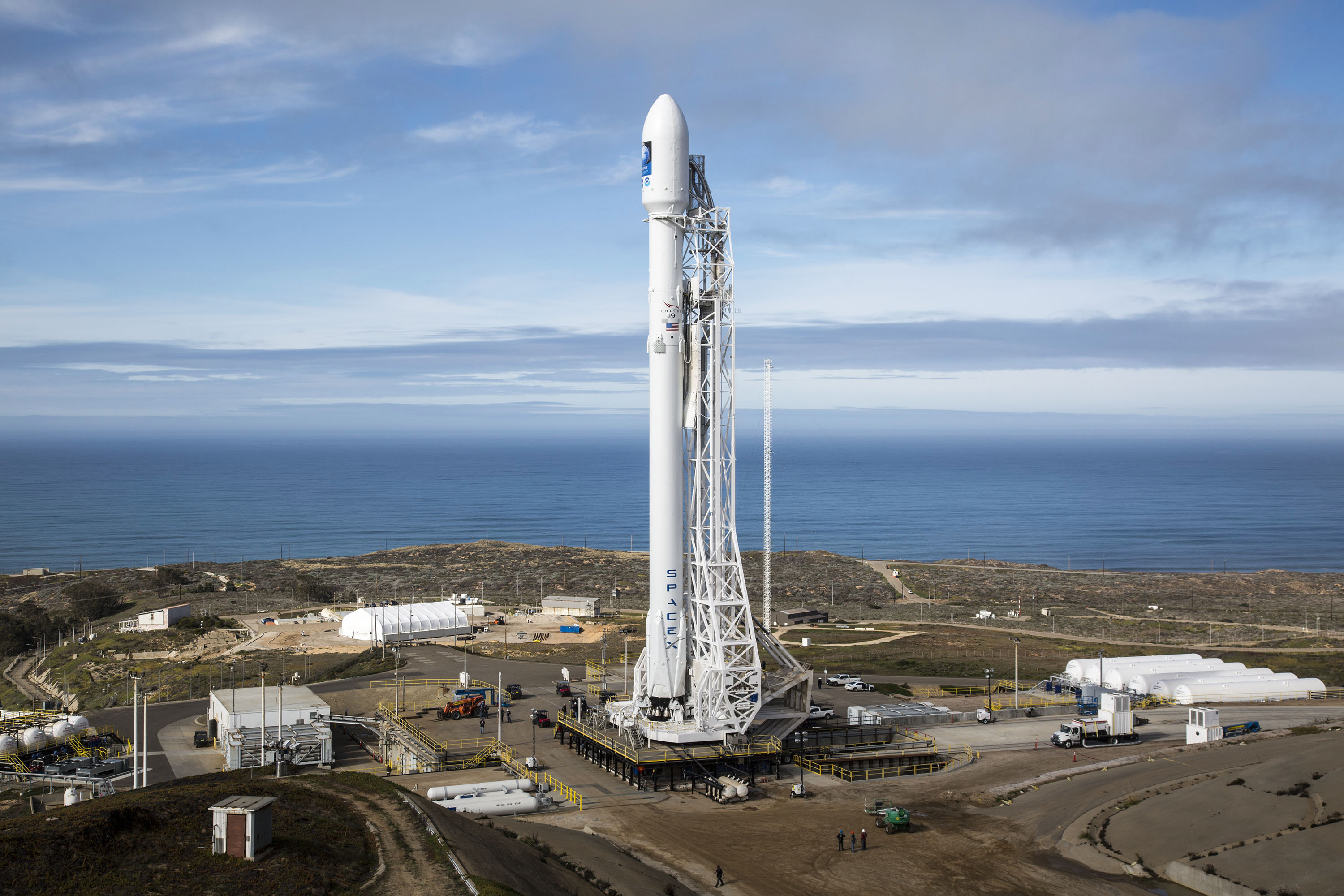
Space stocks extended their rally on Tuesday afternoon, with rocket and satellite names climbing again as Wall Street prepares for what could be the largest US listing on record. SpaceX is on track to file its IPO in June, and traders are positioning into the public space cohort. At the same time, American Airlines said it picked SpaceX's Starlink to power Wi-Fi on more than 500 of its Airbus narrowbody jets starting in early 2027, adding a second equity angle to the same theme.
TL;DR
- Rocket and satellite names led the tape midday Tuesday on continued SpaceX IPO momentum.
- SpaceX is targeting a Nasdaq listing under ticker SPCX on June 12, 2026, with reports of a raise up to $75 billion at a valuation above $1.5 trillion.
- Rocket Lab (RKLB) is roughly 57% higher since IPO speculation surfaced in late March; AST SpaceMobile (ASTS), Intuitive Machines (LUNR), and Planet Labs (PL) have all participated in the move.
- American Airlines (AAL) selected Starlink for in-flight Wi-Fi on more than 500 Airbus jets, joining United, Southwest, Alaska, and now American on Starlink, while Delta chose Amazon Leo.
- The setup is binary: either the SpaceX listing turns into a true sector re-rating, or the cohort hits an "IPO sell-the-news" reversal once SPCX prints.
SpaceX IPO Sets the Tone for the Space Cohort
SpaceX is preparing to debut on Nasdaq under the ticker SPCX on June 12, 2026, in what could be the largest US IPO ever recorded. Reports point to a target raise of up to $75 billion and a valuation north of $1.5 trillion, well above any prior space-sector listing.
The financial profile, however, remains heavy. SpaceX reported $4.7 billion in first-quarter revenue alongside a $4.3 billion loss, according to filing summaries. The company runs Starlink, the roughly 10,000-satellite broadband constellation, plus its launch business and the AI unit xAI.
For public-market traders, the IPO has become a magnet. Investors who cannot buy SpaceX directly are accumulating proxies in adjacent listed names, which is how a single private filing has lifted an entire cohort.
American Airlines Picks Starlink for 500+ Planes
American Airlines confirmed on Tuesday that it will install Starlink on more than 500 of its Airbus narrowbody aircraft, including A321neo and A321XLR jets. The rollout begins in early 2027 and will cover most of the carrier's domestic and short-haul international flying.
Heather Garboden, American's Chief Customer Officer, framed the deal around delivering "an at-home level of Wi-Fi experience" to passengers. Free in-flight connectivity has been available to AAdvantage members since January 2026, so the upgrade pushes American closer to feature parity with United and Delta.
The competitive map is now clearer. United, Southwest, Alaska, and now American Airlines are all on Starlink, leaving Delta as the lone major holdout with Amazon's Project Kuiper Leo service and a 2028 rollout. That gives SpaceX a meaningful US aviation footprint heading into the IPO.
Why Space Stocks Are Outrunning the Broader Tape Ahead of the SpaceX IPO
The rotation into space names has been ongoing for weeks, and Tuesday's move extended it. Rocket Lab is up roughly 57% since SpaceX IPO speculation surfaced in late March, with year-to-date gains above 80% according to sector trackers. The company posted Q1 FY2026 revenue of $200.3 million, up 63.5% year over year, and grew backlog to $2.2 billion on new Electron, HASTE, and Neutron contracts.
AST SpaceMobile reported just $14.7 million in Q1 revenue, but management guidance for 2026 calls for $150 million to $200 million for the full year. That midpoint implies roughly 147% year-over-year growth and helps explain the asymmetric reaction in the stock.
Intuitive Machines is up about 110% year to date, while Planet Labs sits in the same neighborhood at roughly 106%, according to sector data. These are not earnings-driven moves alone. They reflect a re-rating of the entire listed cohort on the read-across from SpaceX's expected valuation.
The space rally is running in parallel with the AI-hardware rally, both fueled by capex narratives rather than near-term cash flows. See our coverage of Micron crossing $1 trillion on AI memory demand and our midday check on stocks near record highs for the broader tape context.
Potential Positives vs Negatives
Upside drivers
The IPO itself is a forcing function. A successful SPCX listing at $1.5 trillion or higher would set a public-market comp that lifts every listed peer's multiple, particularly the names with credible launch cadence or satellite revenue ramps.
Fundamentals are also improving. Rocket Lab's $2.2 billion backlog and AST SpaceMobile's revenue guidance trajectory give portfolio managers a defensible reason to stay long, even if the IPO trades poorly out of the gate.
The American Airlines deal is incremental, but it confirms a real commercial moat for Starlink in domestic aviation. That strengthens the SpaceX revenue story heading into the roadshow window.
Downside risks
Valuations are stretched. Rocket Lab, Intuitive Machines, AST SpaceMobile, and Planet Labs have roughly doubled year to date, and most space names trade at premiums that already discount a strong SpaceX print. Any softness in IPO demand could trigger a sharp mean-reversion.
SpaceX's own income statement is a risk. A $4.3 billion quarterly loss on $4.7 billion of revenue is unusually large for a company seeking the largest IPO in US history, and skepticism on the path to profitability could weigh on sentiment.
Single-headline risk is also elevated. A delay to the June 12 listing, a downward revision to the raise size, or weak banker indications would hit the proxy basket fast.
What Could Happen from Here
Base case
SpaceX prints close to $1.5 trillion in mid-June. RKLB, ASTS, LUNR, and PL hold most of their year-to-date gains, with two-way price action around the listing window as institutional money rotates between the proxy basket and SPCX itself. AAL trades neutral on the Starlink news, with the deal supporting the unit revenue narrative without moving near-term margins.
Upside case
SPCX opens above its IPO range and trades higher in the first session. The cohort gets a fresh leg, with Rocket Lab and AST SpaceMobile leading on launch cadence and broadband narratives. Aviation read-through helps AAL and other Starlink-equipped carriers. Confirmation comes from broad volume expansion and follow-through on index inclusion talk.
Downside case
SpaceX cuts the raise or delays the listing. The proxy basket gives back 20% to 30% in days as fast money exits. Any earnings disappointment at smaller names amplifies the move. Confirmation comes from a break below 50-day moving averages on RKLB and a failure of LUNR to hold prior breakout levels.
What Traders Should Watch Next
- SpaceX IPO timing and pricing. Any update on the June 12 target date, raise size, or roadshow feedback is the central catalyst.
- Volume and breadth in the proxy basket. Watch RKLB, ASTS, LUNR, PL, and Redwire (RDW) together. A coordinated bid or coordinated drop tells the cohort story.
- AAL price action versus other Starlink-equipped carriers. Compare against UAL and LUV to see whether the Starlink narrative is being priced as a structural margin lever.
- Delta strategy on Amazon Leo. Any update on the 2028 Kuiper rollout could shift competitive perception in the connectivity arms race.
- Macro tape risk. Higher Treasury yields or a sharper risk-off move would compress multiples across long-duration growth, and the space cohort is one of the most exposed.
The next two to three weeks should clarify whether the space rally is a true re-rating or a pre-IPO trading vehicle. Either outcome creates clear opportunities, provided position sizing accounts for the elevated single-headline risk in this part of the tape. This is not financial advice; use these scenarios as a framework for building your own plan with clear invalidation levels and risk limits.
Build real skills, not bad habits. ChartDojo gives traders a structured way to practice setups like this with AI-powered feedback on every trade, so you can pressure-test ideas before risking real capital. Start your free trial and take the SpaceX IPO trade plan into the simulator instead of into your live account.
Sources
- Bloomberg: Rocket, Satellite Stocks Surge as SpaceX IPO Fuels Euphoria (May 26, 2026)
- CNBC: American Airlines Picks SpaceX's Starlink for In-Flight Wi-Fi on More Than 500 Planes (May 26, 2026)
- CNBC: SpaceX's Historic IPO Plans
- CNN Business: SpaceX Files for Long-Awaited Public Stock Offering
- Yahoo Finance: American Airlines to Install Starlink Wi-Fi on 500+ Planes
Header image source: wikimedia by Rept0n1x. License: CC BY-SA 3.0.
