
By Ulysses Cornelius. Educational market analysis, not financial advice. Source context is current as of 10:45 p.m. ET on Sunday, June 21, 2026.
TL;DR
- A Ras Laffan blast at Qatar's Barzan gas facility created a fresh natural gas Risk Watch for traders.
- Bloomberg's high-priority feed reported at 02:31 GMT that a malfunction ignited a blast and left 18 people missing.
- AP reported at least 54 injured and 18 missing as Qatar tried to restart operations at the gas hub.
- The market read is mixed: U.S. natural gas and TTF Gas are higher, while Brent and WTI are still lower on U.S.-Iran diplomacy.
Ras Laffan blast natural gas risk watch: what happened
The Ras Laffan blast natural gas risk watch is now the cleanest new catalyst for energy traders. It is separate from the earlier U.S.-Iran roadmap headline that sent crude lower. The roadmap still matters, but this new event shifts attention back to Qatar's gas infrastructure.
Bloomberg's markets feed reported at 02:31 GMT that a Qatar domestic gas plant malfunction ignited a blast and left 18 people missing. AP reported that the explosion hit the Ras Laffan industrial area as workers tried to restart operations after earlier disruption from the war, with at least 54 people injured and 18 still missing.
QatarEnergy's update page identified the incident as an operational event during start-up operations at the Barzan local gas supply facility inside Ras Laffan Industrial City. investingLive, citing Qatar's Interior Ministry, QatarEnergy, and Reuters context, said authorities described the fire as contained and said there was no leak threatening public safety.
That split is why this is a Risk Watch. The confirmed facts point to a serious facility incident at a strategically important gas hub. The official explanation still points to an internal operational problem, rather than a new attack. Traders should keep those two ideas separate.
This post is distinct from ChartDojo's earlier U.S.-Iran roadmap oil flash and the Brent and WTI risk premium update. Those posts covered diplomacy and crude's Hormuz premium. This one covers a new gas-facility incident and its first read-through to LNG, natural gas, and cross-asset risk.
Why markets moved
Ras Laffan matters because Qatar is central to global liquefied natural gas, or LNG. LNG is natural gas cooled into liquid form so it can move by tanker. When a facility incident appears at a hub tied to LNG operations, gas traders immediately ask whether output, loading schedules, or safety checks could slow down.
The first market read is not one-way. Trading Economics showed U.S. natural gas up 2.98% and TTF Gas up about 1.19% on June 22. TTF is the main European gas benchmark. That move fits the supply-risk channel. The same snapshot showed Brent and WTI lower, because crude is still responding to signs of U.S.-Iran diplomatic progress.
So the current message is narrow but important. Gas markets are adding some caution around Qatar. Oil markets, for now, are still taking comfort from the roadmap headlines. If new information shows damage to export operations, the gas reaction could deepen. If officials confirm no wider disruption, the risk premium can fade.
Implications for the most impacted trader cohorts
Natural gas and LNG traders: This is the primary cohort. The immediate job is to watch official QatarEnergy updates, vessel flow around Ras Laffan, and TTF follow-through into the European morning. A contained local-gas incident is different from a broader LNG export outage.
Oil futures traders: Brent and WTI are still trading the U.S.-Iran diplomacy path more than the Qatar facility headline. A bigger gas outage could pull crude back into the regional risk trade, but that is not confirmed yet.
Equity-index futures traders: S&P 500 and Nasdaq futures care through the inflation channel. Higher gas prices can feed European energy stress and revive broader inflation concern. Lower crude, by contrast, can support risk appetite. That mixed setup argues for patience into the U.S. cash open.
Crypto traders: Bitcoin and Ether are secondary here. They are useful as liquidity checks. If crypto weakens while gas rises and equity futures soften, traders may be treating the blast as a broader risk signal.
Potential positives vs negatives from this catalyst
Potential positives
- QatarEnergy framed the incident as operational, which lowers the odds that traders immediately price a fresh military escalation.
- Reports that the fire was contained and that no public-safety leak was identified could limit the risk premium if confirmed again.
- Crude remains lower on U.S.-Iran diplomacy, giving cross-asset traders a buffer against a broad energy panic.
Potential negatives
- The casualty reports are severe enough to keep operations, inspections, and restart timing under scrutiny.
- Ras Laffan's role in LNG makes even a localized incident important for European and Asian gas traders.
- If damage or safety delays affect loading schedules, the gas-market move can spread into inflation expectations and index futures.
What could happen from here
Base case: contained incident, gas premium stays limited
The base case is that officials keep describing the blast as an internal operational event, the fire stays contained, and QatarEnergy gives no signal of a wider export disruption. This path is confirmed by stable vessel activity and TTF failing to extend above the early move. It fails if the missing-person count worsens alongside reports of material facility damage.
Upside case: restart clarity calms energy markets
The upside case for risk assets is a clear operational update: no major structural damage, no leak, and no broad delay to LNG restart plans. In that case, gas can give back part of the premium and crude can keep following the diplomacy track lower. It is invalidated by any official force majeure language or cargo delay notice.
Downside case: LNG disruption becomes the main story
The downside case begins if QatarEnergy or shipping data points to reduced LNG availability. TTF and U.S. natural gas would likely stay bid, and equity-index futures could lose the inflation-relief benefit from lower crude. This case is invalidated if multiple credible updates confirm normal loading plans and no follow-on safety risk.
What to watch next
- QatarEnergy statements on Barzan facility damage, restart timing, and worker safety.
- Any confirmed update from Qatar's Interior Ministry on injuries, missing workers, or public-safety risk.
- TTF Gas and U.S. natural gas follow-through during the European session.
- Brent and WTI reaction if gas headlines start to compete with the U.S.-Iran roadmap.
- Ras Laffan vessel activity, cargo loading schedules, and any force majeure language.
- S&P 500 futures, Nasdaq futures, Bitcoin, and Ether as checks on whether the event is spreading beyond energy.
Sources
- Bloomberg: Qatar gas plant malfunction ignites blast
- AP: Explosion at Qatar's Ras Laffan during restart effort
- QatarEnergy: Ras Laffan operational incident update
- investingLive: Ras Laffan blast and market-risk context
- Trading Economics: EU natural gas and commodity snapshot
When we tested fast-news review flows on chartdojo.io, the strongest trader notes separated confirmed facts from price reaction before forming a view. Build real skills, not bad habits. Start a free trial at ChartDojo and use AI-powered feedback to practice turning fast energy headlines into structured trade reviews.
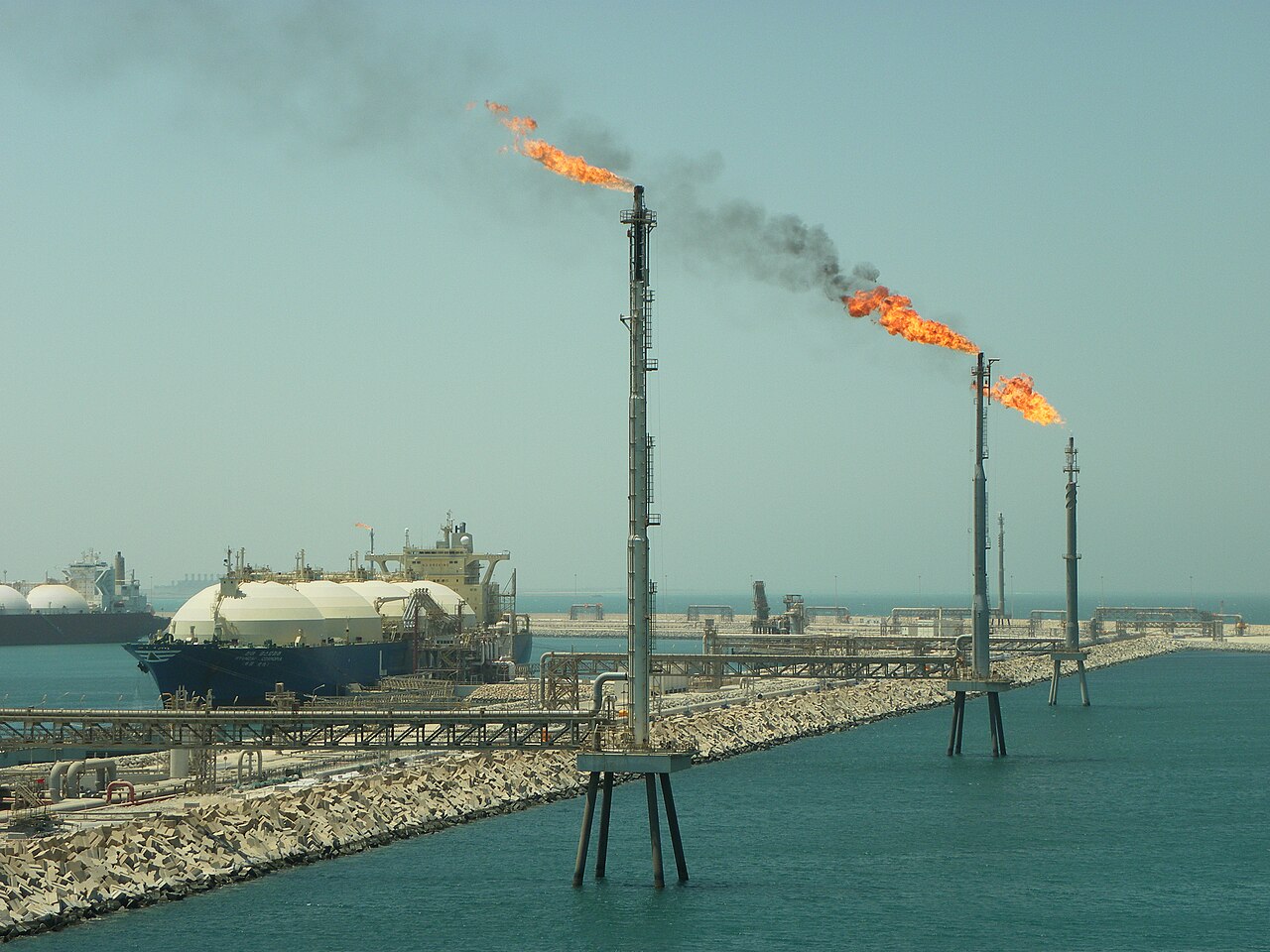
Header image: Ras Laffan LNG terminal in 2012 by Matthew Smith via Wikimedia Commons, licensed under CC BY 2.0.